
The extraordinary influx of immigrants and refugees has been critical to Toronto’s success. These newcomers have brought the city new energy and ideas, new connections to the world and new sources of labour. As Doug Saunders writes in his recent book, Arrival City, Toronto has provided a welcoming and nurturing environment. But, that reputation is currently under threat.
Most often it has been hardship or threats that have fuelled journeys here, and Toronto and other cities in Canada have proven to be a safe haven. Our city leaders have made newcomers feel comfortable. Mayor Nathan Phillips welcomed the Hungarians fleeing the Soviet invasion in 1956; city council welcomed the Vietnamese boat people in 1980, to use two examples. Our social policies have helped the mélange of cultures thrive together. Many Torontonians think the city has incorporated working with different cultures into its DNA.
But it seems that part of the city’s underpinning might be pulled out from under our feet. The federal government decided to deny health coverage to about half the refugees who come to Toronto, about 4,000 new residents. This is a significant change of a long-standing policy. Since 1957, Canada has provided all refugees arriving in Canada with standard health care coverage. Since a majority of immigrants and refugees have come to Toronto as their first stop in this country, that’s been part of the welcome mat.
The Harper government announced the changes in the spring, to come into effect July 1. Mayor Rob Ford has provided so many distractions that few Torontonians noticed the proposals, and hardly anyone thought there was a role for city council.
Fortunately, the city’s public health department was on the change immediately.
In May, the Board of Health considered a staff report asking the federal government to reinstate the program and consult with municipalities. It adopted the recommendations and sent them to city council for early June. Those present at the city council meeting — Mayor Ford was not — agreed unanimously, and letters were sent.
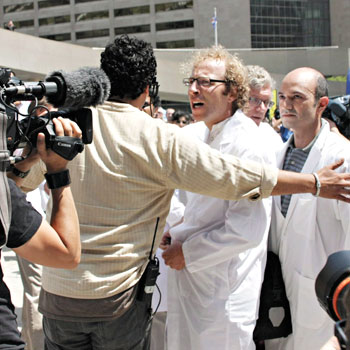
A number of Toronto doctors led demonstrations in front of federal offices on St. Clair Avenue East, and the Toronto Board of Rabbis also objected, particularly to the change that will shut out from Canada refugees from countries the government considers “safe.” As the rabbis note, Germany was “safe” for everyone except Jews in the 1930s, just as Hungary today is safe for everyone except the Roma. Refusing to accept refugees from a country just because most people there are treated well can lead to tragedy.
Now, four months later, we are learning about those refugees who are affected. The Scarborough Volunteer Health Clinic is one place in the city that treats refugees who do not have health coverage. The clinic is open two evenings a week, staffed by volunteers, and instead of treating 10 or twelve people an evening, it is now overloaded, seeing three or four times that number. Many of the stories are heart-wrenching.
Toronto Public Health programs are available to anyone, but they are specialized, and the department does not run acute-care clinics, which is what refugees need. We had assumed the health coverage for refugees in place for more than 50 years would continue.
Sadly, the federal government has never responded to the city’s request. I’ve run into the same blank wall.
Welcoming immigrants and refugees is part of Toronto’s brand. Mayor Ford needs to pay attention and contact Prime Minister Harper — the man he brags he has gone fishing with — and determine how newcomers can continue to receive good health care.
Post City Magazines’ columnist John Sewell is a former mayor of Toronto and the author of a number of urban planning books, including The Shape of Suburbs.

