
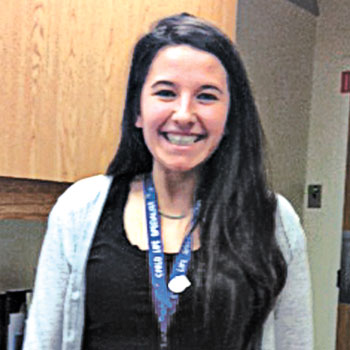
Thornhill resident Sabina Spataro may try to stay modest, but many families across the GTA consider her an angel.
Spataro is just one of the 32 trained volunteers who provided care last year to families affected by cancer. The network was founded by Audrey Guth, who drew on her experiences, not only as a cancer survivor, but as a child affected by a parent’s illness.
“When I was very young, I had a parent who had cancer, and we lived with that for three years until my father passed away,” she said. “I remember how haunting that was, going to treatment with him.”
Guth said that her idea sparked during her own treatments. “I was looking around the room. There were these young mothers with children. I remember thinking, ‘This isn’t a place for children.’”
Wanting to provide that care for mothers who could not afford it, she started the Nanny Angel Network in 2008. Nannies work varying hours, from occasional visits to long days, taking care of children and daily household tasks while the children’s mothers attend treatments, recuperate and rest.
Spataro has been involved for approximately five years. Having worked with children most of her life was a draw for her, but she felt a personal draw to the program as well. “My best friend’s mom had breast cancer a long time ago,” she explained. “I had just come out of university, and she had heard about the network and passed along the information to me.”
Spataro works full-time at the Hospital for Sick Children in Toronto, as a child life specialist, but still volunteers her spare time to work with families in need. “Some families I’ve just seen once or twice, but others I’ve worked with over a longer period of weeks or months.”
It can be an emotionally heavy experience, she said, especially for the 48 per cent of mothers helped who are single parents. “When you’re stepping into someone’s house, you’re essentially stepping into their world,” she said. “It’s important to practice self-care and allow yourself to de-stress — you want to be able to be there for the families and be there 100 per cent.”
But Spataro said that it’s still one of the most rewarding experiences of her life thus far. “When you see people in hospitals, you don’t think about their home life and how illness and hospitalization affects life at home.”

