
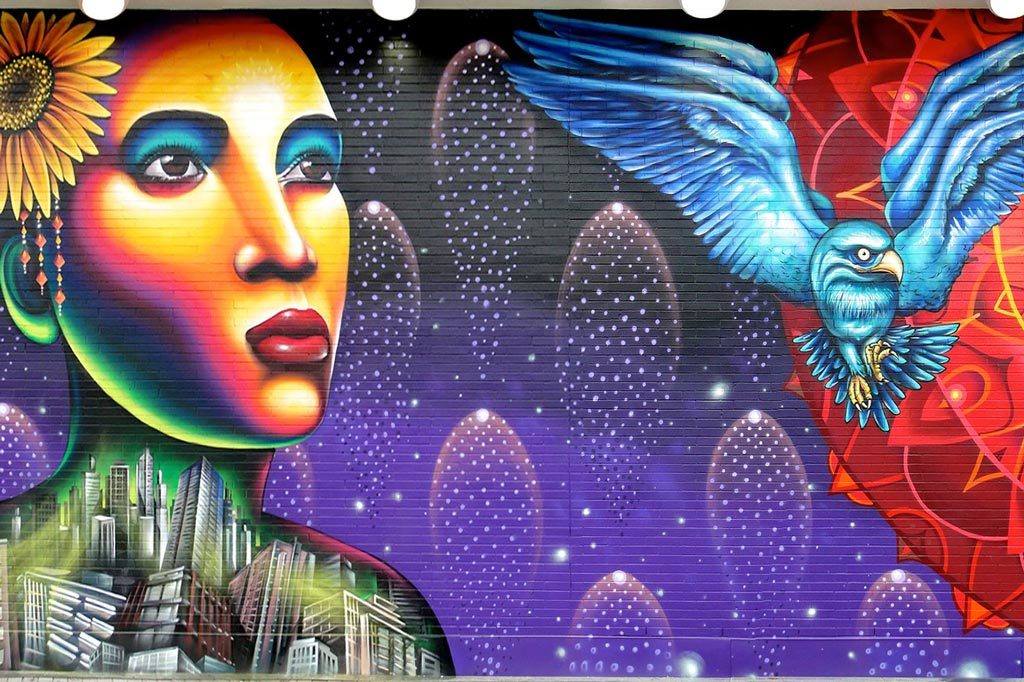
Urban art duo Shalak Attack and Bruno Smoky have been trotting the globe, unleashing their psychedelic and socially conscious graffiti on unsuspecting public spaces for the past six years. Their journey has taken them to Richmond Hill.
Shalak and Smoky are teaming up with landscape architects at Brook McIlroy in imagining a dynamic, youth-oriented area located in Lake Wilcox Park. Shalak is taking the lead on all things graffiti for the project.
“We don’t often get to collaborate with landscape architects, so it’s a really interesting way to explore different creative expressions,” said Shalak.
The park will feature a skate park, beach volleyball court and a netted, two-storey-high climbing structure for youths between 13 and 19 years old. The $3.8 million project has been funded by the Town of Richmond Hill. It will officially be open to the public in spring 2018.

(IMAGE: SHALAK ATTACK)
Shalak and Smoky are looking to incorporate their urban esthetic not only in their master graffiti murals, which will be featured throughout the park, but also in metal structures that could last 10 to 20 years.
“Instead of just plunking visual arts pieces, murals into the future park, it was about how we could create the visual feeling or flow of the whole park,” said Shalak, a Toronto native. Graffiti’s impact lies in its unique ability to reach all types of people through the use of public space, said Shalak.
The duo sat down last winter with teenagers in the community and nailed down themes, including environmental issues and self-discovery, to incorporate into the park.
“At the end, it will be their park, and it’s important that they feel like what’s important to them is echoed,” Shalak told Post City.
Shalak and Smoky’s vivid surreal imagery is often charged with social commentary or issues directly affecting the communities they are in.
The pair’s most recent public project was in Kelowna, B.C., live painting public murals for the Bass Coast Festival.
“I hope that they [public art projects] pose questions and not give a conclusion to people that, ‘This is what should happen,’ but so that people can think about things for themselves,” said Shalak.

