
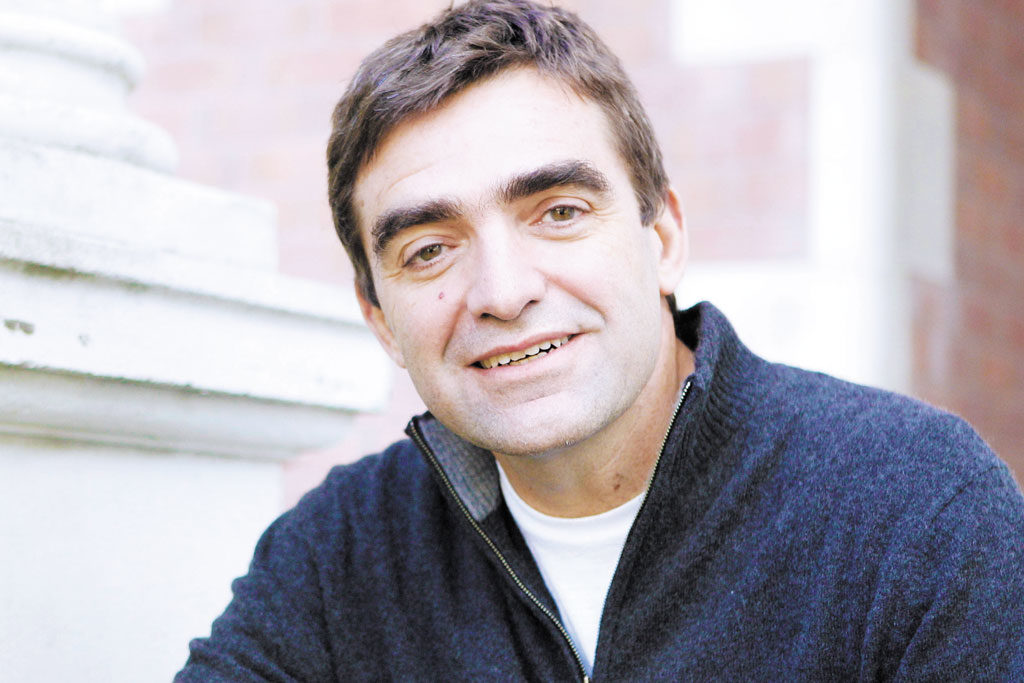
We all have issues. When novelist Nino Ricci could no longer sleep, no matter what he tried, it was new and unexpected. But he did what he’s always done when unique situations arise. He wrote about it. His new novel, Sleep, was released on Sept. 22.
The protagonist of Nino Ricci’s latest novel differs substantially from those in his previous novels. David, a historian of ancient Rome, is quite an unlikeable character who does things such as cheat on his wife, with little remorse, and write a book called Masculine History — to irk feminists — among other things, all of which suggest he is not a well-adjusted person.
Like many men today, he struggles with understanding current gender roles in society. Ricci feels that many contemporary male readers would be able to relate to David’s struggle and hopes to reach them through this novel.
Things change when he develops a sleep disorder. “Ironically, the sleep disorder starts him on a kind of path of self-discovery of realizing that his own life is a mystery to him,” Ricci says. “He suddenly becomes aware of this shadow self who isn’t happy, doesn’t feel successful and is not the person who he has been trying to think of himself as all these years.”
Ricci channeled his own experience with a sleep disorder. “I’d taken sleep for granted until then, and it struck me that it was also rich territory for fiction,” he says. “I realized how common sleep disorders are, how sleep deprived our society is and how little attention people pay to it, even though it’s fundamental so many aspects of our health.”
He read widely on the topic, consuming everything from popular literature to research papers, avoiding only the most technical science. To enhance David’s background he also conducted substantial historical research, allowing the book to subtly juxtapose the decadence of his main character’s forte, ancient Rome, to contemporary society.
“We’ve reached what seems to be this real high point in culture but also a moment where we seem to need increasingly more outrageous forms of stimulation, constantly looking for the next new thing to distract us from our lives,” he says.
“Our spiritual lives seem to have given over to rampant consumerism. We’re burning through the world’s resources at a record pace, and so are we headed for the same kind of big decline that Rome fell into after it reached its peak.”
The author reads from his new novel on Oct. 7 at North York Central Library as part of the Toronto Public Library’s Eh! List Authors’ Series.

