
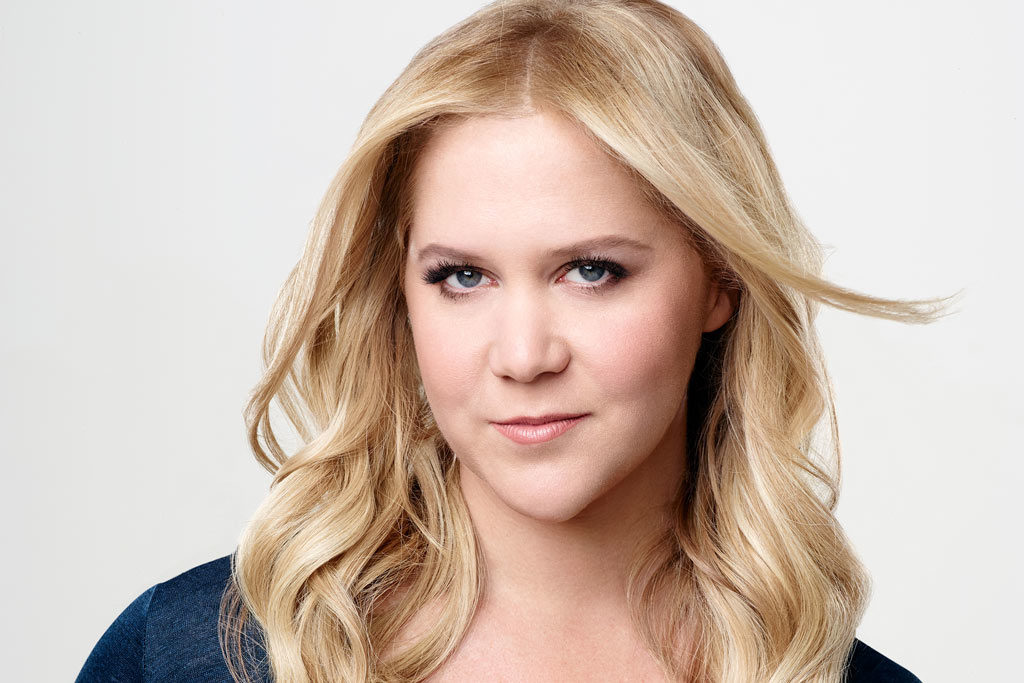
Amy Schumer is arguably the hottest comic on the planet right now. Her sketch show on Comedy Central is the most provocative and nervy comedy series currently on cable. She’s won a Peabody Award. She’s a feminist icon. She just released her first film, Trainwreck. And she’ll be here live in Toronto next month as part of Funny or Die’s Oddball Festival.
And, according to some, Amy Schumer is a racist.
It all started a few months ago when a writer from the Guardian called her out on some racial jokes she’d done in her act. Jokes like “Nothing works 100 per cent of the time, except Mexicans” and “I used to date Latino guys, but now I prefer consensual.”
Cheap shots, to be sure, and not at Schumer’s usual high level of wit. But the column went viral, and Schumer found herself on the defensive. It’s clear from her body of work that Schumer’s no small-minded redneck, so why did the Guardian writer call her out?
In the early ’90s, people were arguing for “healthy humour” under the guise of political correctness. Their voices were drowned out by the likes of Howard Stern, shock comic tsunami, but the sleeping giant of moral judgment has been reawakened.
Around the same time as the Schumer scandal, Jerry Seinfeld — not the edgiest comic around — told reporters he would no longer perform at colleges because the students have become too judgmental about sex and race. He was immediately called a lot of names such as “privileged,” “white” and “male,” but there’s no doubt there’s been a huge change at universities. If you’re a comic, you have to watch every word you say. Nothing is innocent.
It’s different in most comedy clubs — just about anything still goes. They’re small, under-the-radar rooms that still have the luxury of free speech.
They draw from a wide audience base that cares little for the concerns of special interest groups.
But comedy stars really have to watch it. When South African comedian Trevor Noah was tapped to take over The Daily Show, someone found a few of his old comedy tweets that were mildly sexist and anti-Semitic and posted them. They went viral, and Noah had a lot of explaining to do.
The rule is that it’s all right to make fun of your own race, but not of others. There’s also a general consensus that an ethnic group that is successful and not the victim of widespread prejudice is also a fair target. Swedish jokes, anyone?
Comedians don’t like rules, however, which is why they keep getting into trouble. My problem with all of this is that so many of the stereotypes are just out of date. My Italian friends aren’t in the construction business, and not all my Jewish buddies are lawyers.
Still, free speech in comedy has to be a near absolute for good comics to keep pushing the envelope. Cultural critics need to understand that the audience is remarkably aware of context and character and that the audience can discern between a joke that stems from hate and one that does not.
In the end, Amy Schumer apologized: “Once I realized I had more eyes and ears on me and had an influence, I stopped doing jokes like that onstage,” she tweeted. “I am evolving as any artist. I am taking responsibility and hope I haven’t hurt anyone. And I apologize if it did.”
Thought police 1, comedian 0.

