
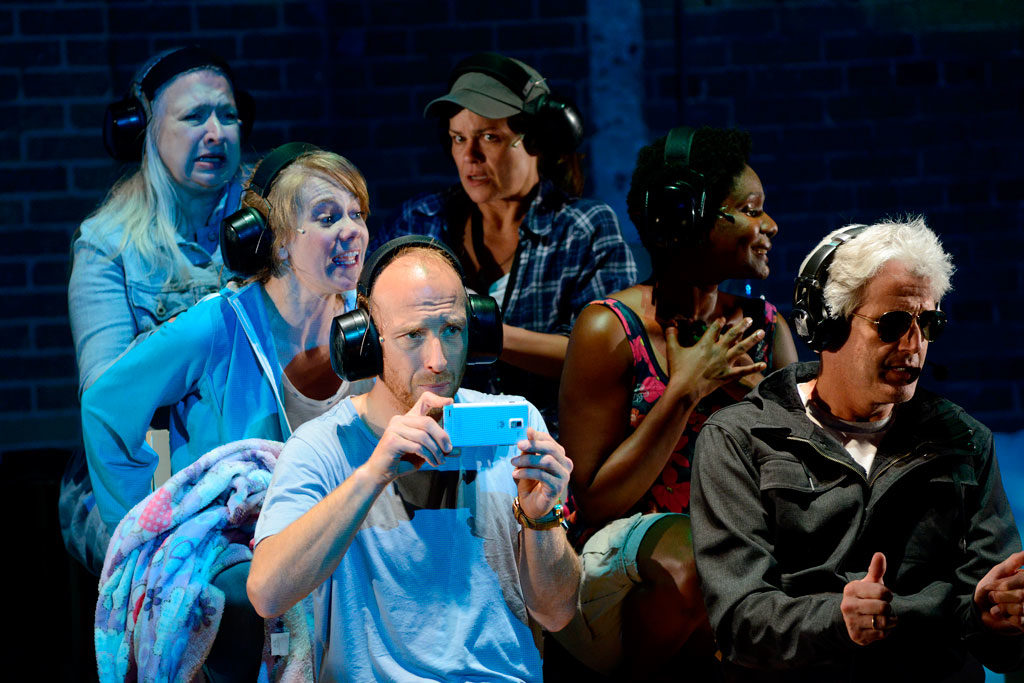
Post City sat down with Eric Peterson and Kristen Thomson, two stars of Tarragon Theatre’s season-opening production The Watershed. Billed as an environmental documentary play by Annabel Soutar, it runs until Oct. 30, www.tarragontheatre.com.
Why is this documentary play relevant to Toronto?
Peterson: Well I mean, if you’re a citizen in this country, it’s pretty relevant. For this theatre, in particular, I think this documentary theatre is an interesting form just on theatrical terms. But the content raises the larger question of what we’re doing vis-à-vis the economy and our environment. These big political and economic questions that we are presented as citizens at this time.
Thomson: I think right now faced for a long time with what’s happening to our water in Canada and internationally, Canada is in a unique position because we have so much water to consider and care for in the long term. The play does absolutely talk about the kinds of decisions we are making as a country about how to either look after or exploit that resource. But I think one of the things I find humane about the play is that it is trying to engage at a very personal level.
The documentary form is more common to film. How does it work onstage?
Peterson: Basically, Annabel [playwright Annabel Soutar] wanted to look at this aspect of water. That’s not an uncommon topic for documentaries we see on film and television. But she’s looking for a story that is happening in this country that she feels she can form a dramatic event around. In this case, the political discussion around the closure of the Experimental Lakes area.
You can’t just go in during rehearsals and change dialogue. These are actual quotes?
Thomson: Yeah, like we can’t go, “My character wouldn’t say that” because he did.
Peterson: You have to take it like that. But also it comes with a great authority: well, he said it that way. I’m not going to be critical of it or see if I can improve upon it.
Thomson: One of the things that stands out in a verbatim transcription is that it captures the spontaneous moment when something that was unsaid becomes said in a particular way or something that is unknown becomes known, and it actually captures that moment. And that’s kind of drama.
But the politics have changed. Trudeau is the new PM. Did that change things?
Thomson: The conversations that are being held and not held around pipelines are still urgently at the centre of our national conversation. And this play is absolutely the terrain. You have to adjust your eye piece a little bit, but that’s all you really need, as really we are looking at the same questions.
Peterson: Playing to audiences before the last federal election where this would come up, it had this kind of agitprop sort of veneer to it — the sense that you could immediately do something. Now that’s not there, but the issues haven’t gone away. We are reminded that it’s not just politicians or governments that have to figure this out because they are too big, these issues. One of the aspects of this play becomes about that issue and how do we even curate a conversation? It’s a wonderful thing to contemplate how do I shut up from my biased point of view long enough to hear someone else.
Did the play impact your own views?
Peterson: It changed me from usual rabid rhetorical bias hobby horse to a certain extent.
Thomson: I feel like the kind of nuance that is in the play really would require a greater level of engagement with civic life than I have and that’s the truth. In a way, doing the play was about wanting to have a way to step in and engage with this. It’s my gesture toward engaging with those kinds of questions.

