
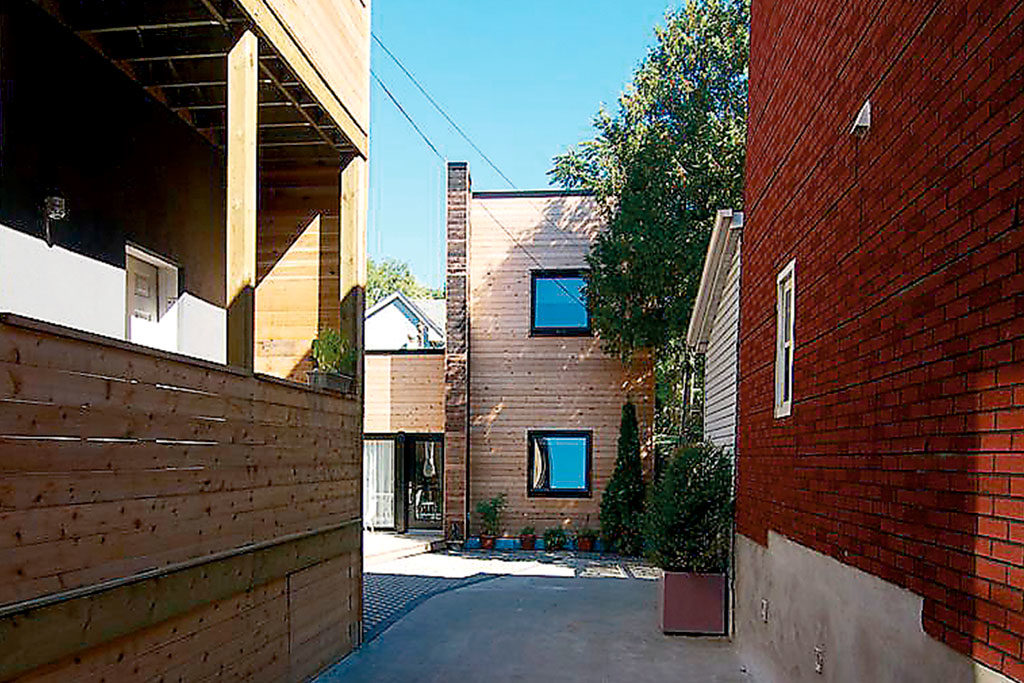
Laneways behind homes are common throughout the city and throughout Midtown. Some laneways serve as access to garages at the back of properties, and others are public laneways that are easements for utilities or simply public space backyards.
Laneways are also a source of frustration for residents and the city. During the winter the laneways are generally not maintained and can be difficult to access by car. In the warmer months, dwellings and fences that back onto them are targets for graffiti or petty vandalism as the area is often not well-lit or monitored.
Toronto City Council is now considering another alternative for homeowners whose properties back onto a laneway: building laneway housing. Laneway housing is a concept that has been widely implemented in
Vancouver and is now being tested as a viable opportunity to improve housing options in Toronto. The idea is that current structures that abut laneways, such as garages or storage sheds, could be converted into rental housing.
The new housing would be built on the existing property but access to the unit would be through the laneway. If done properly, laneway housing could be an excellent opportunity to build affordable units throughout the city that can also be rented out. Students would have new housing options; young families would have more options to move into neighbourhoods; and seniors could move into units and live independently while still being close to family.
Of course, there would have to be guidelines on what could be built and how to ensure the privacy of neighbours. Properties would be subject to a minimum lot size before being considered eligible. Vancouver has published a 58-page guide on building on laneways that covers everything from the maximum size to where the windows can be located and how much green space needs to be maintained on the lot.
Toronto would need to develop similar guidelines, but, in addition, there would need to be an approval process that is more rigorous than the Committee of Adjustment. Most neighbours in Midtown would be wary of such development if it meant that three-storey structures started popping up. If laneway housing is successful, it needs to fit into the context of the other houses and not overshadow the existing structures.
The intent is to have a slow, small-scale implementation of the initiative. The reality is that it will be hard to control once approved.
Karen Stintz is a former city councillor, elected in 2003, and was a chair of the TTC. She lives in Ward 16.

