
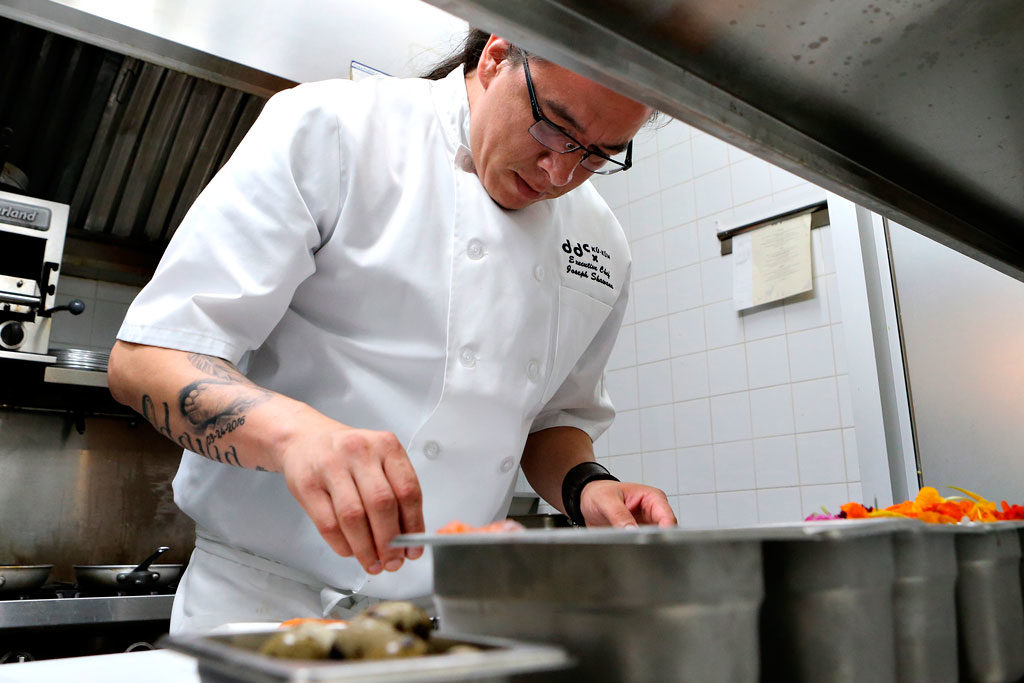
Ku-kum, a restaurant serving up Indigenous dishes near Mount Pleasant Road and Davisville Avenue, has become the subject of controversy due to the inclusion of seal meat on its menu.
Animal rights activists are outraged as the seal meat comes from a commercial company, SeaDNA, rather than a traditional Indigenous source. One activist, Jennifer Matos, started a petition on the website Care2 Petitions and is just signatures away from its goal of 7,000.
Liz White, director of Animal Alliance and leader of the Animal Protection Party of Canada, said Ku-kum is misleading its patrons by serving commercially hunted seal meat.
“It’s one thing to hunt for traditional and subsistence hunting. It’s a whole other thing to market it as a commercial product,” she said. “It’s not even an Indigenous hunt. It’s a commercial hunt by people who are largely not Indigenous, so how on earth can you pitch that as a traditional dish, given how it got there and where it came from and who actually did the killing? It seems to me to not really be telling the whole factual truth.”
However, Aylan Couchie, a Nipissing First Nations artist based in Toronto, started a counter-petition in response to Matos’ petition. She argued Matos failed to do her research and that, in fact, there are Indigenous people taking part in the commercial seal hunt. It has garnered more than 5,000 signatures.
“She’s pretty much making a lot of assumptions and again telling Indigenous people what they should and shouldn’t be eating, and we’re tired of that. We’re tired of constantly having Western values imposed upon Indigenous practices,” Couchie said. “She really needs to educate herself further in terms of who the commercial seal industry supports and the fact that having seal here in Toronto supports Indigenous people.”
Joseph Shawana, head chef at Ku-kum, said the restaurant doesn’t plan on taking its seal meat tartare dish off the menu anytime soon. He noted that the commercial hunt does employ some Indigenous people, and for the restaurant to be able to serve seal meat, it has to be commercially hunted as the meat hunted by Indigenous populations in Iqaluit is not federally regulated.
“If we could source the meat from up north, it would just be overhunted, so that’s the bright side of it. I wish I could financially support those hunters up north,” he said.

