
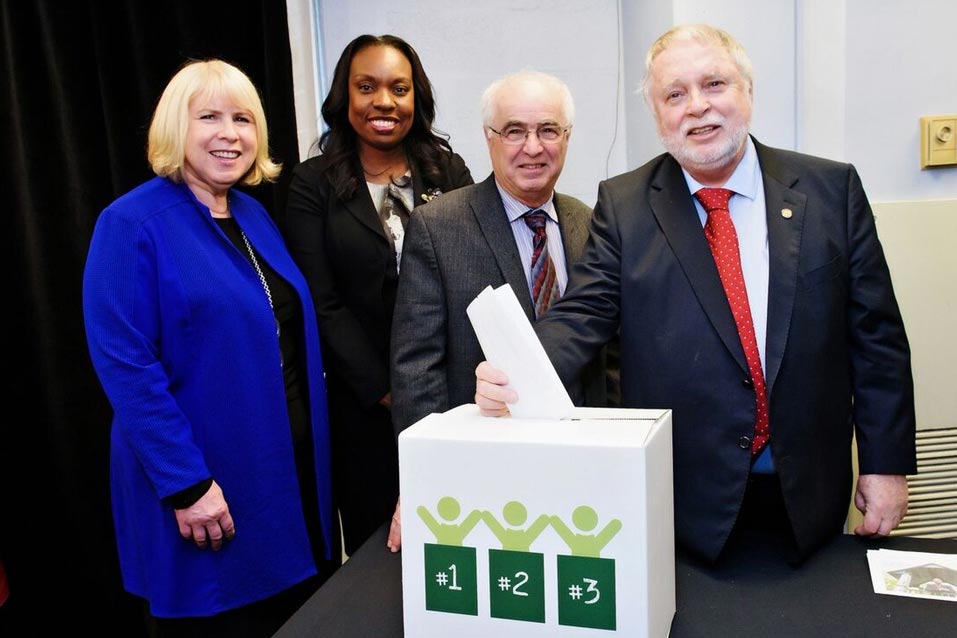
With everyone heading back to school, I hope you’ll forgive me a bit of civics lesson to explain how improving local democracy is as easy as 1, 2, 3.
It boils down to two simple questions: what are ranked ballots and why should you care?
Just a few months ago the province passed revolutionary legislation that gives municipalities the right to use ranked ballots in their elections — if the municipality so chooses. The legislation was a major victory for grassroots activists like RaBIT, Toronto Ranked Ballot Initiative, and now presents an opportunity to really increase democratic access in local towns and cities.
It’s one of the great ironies of politics that municipal elections typically have such low turnouts. Last time around, for example, only 37.1 per cent of Markham voters cast a ballot, and the numbers were even lower in Richmond Hill (32.3 per cent) and Vaughan (30.28 per cent).
It’s ironic because your municipality is your most accessible and relatable level of government. It’s not that we shouldn’t care about F-35 jets and international treaties, but your local council makes sure the garbage gets picked up at your curb and water flows in your taps.
Many came out to a Ranked Ballot Summit in Toronto last month, and it showed that, while the movement has strong representatives there, citizens are also pushing for reform in communities such as Whitby, Kingston and Ottawa.
In our municipalities so far? Largely silence. Richmond Hill, to its credit, is looking into the matter as are Newmarket and Aurora, but the largest cities in the region seem indifferent so far on measures that could strengthen connections between citizens and their government.
Some politicians usually eager to block change actually insult their constituents, arguing the ballots are just too complicated to grasp, but they aren’t.
Here’s the 101: Instead of a single X, your ballot allows you to rank your choices for any given position. This means no more “voting strategically,” instead of voting your heart.
Take the last Toronto mayoral election, for instance. Voters opposed to Rob and Doug Ford seemed to flock to John Tory, concerned Olivia Chow might not be able to unseat the Fords, even if they preferred Chow. But a ranked ballot would allow you to vote for Chow and then cast your second vote for Tory. Your third-place vote could have been for Ford, someone else or no one at all.
With any ranked ballot, when the votes are counted, the person with the fewest votes falls away and their second-place votes are distributed. As soon as someone has 50 per cent of the votes, they have a mandate and are declared the winner.
No more politicians who repeatedly earn a four-year job with 25 per cent of the vote simply because they had four opponents splitting the vote. No more second-guessing, no more playing “what if” games, no more vote splitting, no more not being able to vote for the person you think is the best for the job.
But — here’s the catch — you need to ask Markham, Vaughan and Richmond Hill to make it happen. They now have the power to make your vote count — and thereby, hopefully, to get more people out and voting in the first place. You need to make your voice heard today, to ensure your voice is heard tomorrow.
I also wrote a few months ago about another significant democratic reform that has sadly met a different fate.
A provincial bill to make the regional chair an elected position died a quiet procedural death with the early summer provincial cabinet shuffle.
It’s the second time a malingering bill regarding this issue has met its end due to procedural foibles. York Region is undertaking its own governance review and could result in a decision to willingly ask the province for that power, but the indications so far have been that the status quo is perfectly fine.
The province’s moves to empower voters are significant reminders that change can happen but only if there are citizens who want it. If you want your vote to count more in 2018, make sure your regional and provincial politicians know it.

