
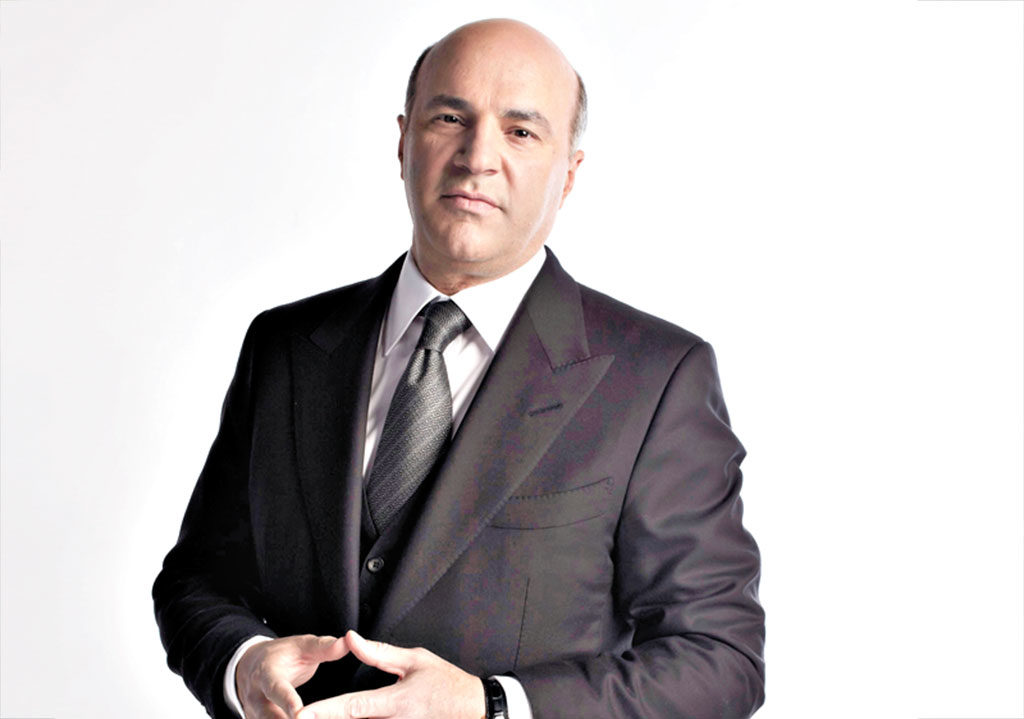
Last month, former Dragons’ Den bigwig Kevin O’Leary caused a media firestorm by publicly expressing interest in joining the Conservative leadership race. Shortly after, a poll put him at neck and neck with former cabinet minister Peter MacKay. Could this actually be a real thing? We caught up with him to find out.
So do you have a genuine interest in politics, or is this all just for publicity?
I wouldn’t get into this fracas and debate if I wasn’t concerned as a Canadian and an investor. I’m not a declared member of any party. I’m interested in affecting change in the way we manage our economy. I call Canada broken for a reason: it is.
What needs to be fixed right now?
What I would do right now, I would look at the number one sector of our economy — energy — and I would look at the jobs lost there. If I were [Alberta premier] Rachel Notley, I would fly to Ottawa. She should be negotiating a maintenance program for her province.
You recently called for her resignation and offered to invest $1 million in the Canadian oil industry if she did. Should people be able to influence politics that way?
No, not at all. I was speaking as an investor, and what I’m saying is symbolic. Thirty-six months ago, Alberta was the envy of Canada. Look at it today. Who else can I blame for that?
Surely there are global issues at play.
Well of course, but when you have stress and uncertainty, that’s when great leadership really matters. We don’t have that in Alberta. It’s a disaster.
People are often outraged by what you say. What’s the difference between the Kevin O’Leary on TV and the real Kevin O’Leary?
They’re the same person. You may find these comments difficult, but it doesn’t change the fact that they’re the truth. By making these statements, I’m trying to get people to focus on a very important issue.
You’ve praised the global wealth gap, calling it “fantastic.” You said that rich people provide poor people with something to aspire toward.
I didn’t say the gap was a great thing. I said that the success of world economies is. Statistically, there will always be a one per cent. There’s nothing good about poverty, but the one per cent pay all the taxes. They create all the jobs. They provide what matters to the Canadian economy. Somehow people tend to forget that over and over again.
Is poverty a matter of aspiration?
No, I think poverty is a horrible thing. But the entrepreneurial way of capitalism is a good thing. The truth is, every other attempt hasn’t worked, and it’s capitalism that has provided most of the success in our standard of living.
You’re often compared to Donald Trump. What do you make of that?
There are some valid comparisons. Both Trump and I have been involved in media, particularly in reality shows. But that’s where the similarities end. He has better hair than I do. I’m a Canadian with Lebanese-Irish roots. I’m not into walls. Canada is a very inclusive society. And the populist concerns that he’s addressing in America are completely different from the problems we have in Canada.
Aside from your business experience, what else would you bring to the table as a politician?
I set targets and I achieve them. The key is to measure the execution. We should all be measured by our past ability to execute.
What do you make of Harper’s legacy: good or bad?
I think time will review him as a successful prime minister in the most important aspect: the economy. But if you think about the DNA of Canada, it’s the diversity and the compassion that Canadians have. And at the end of his tenure, he forgot what is the essence of Canada.

