
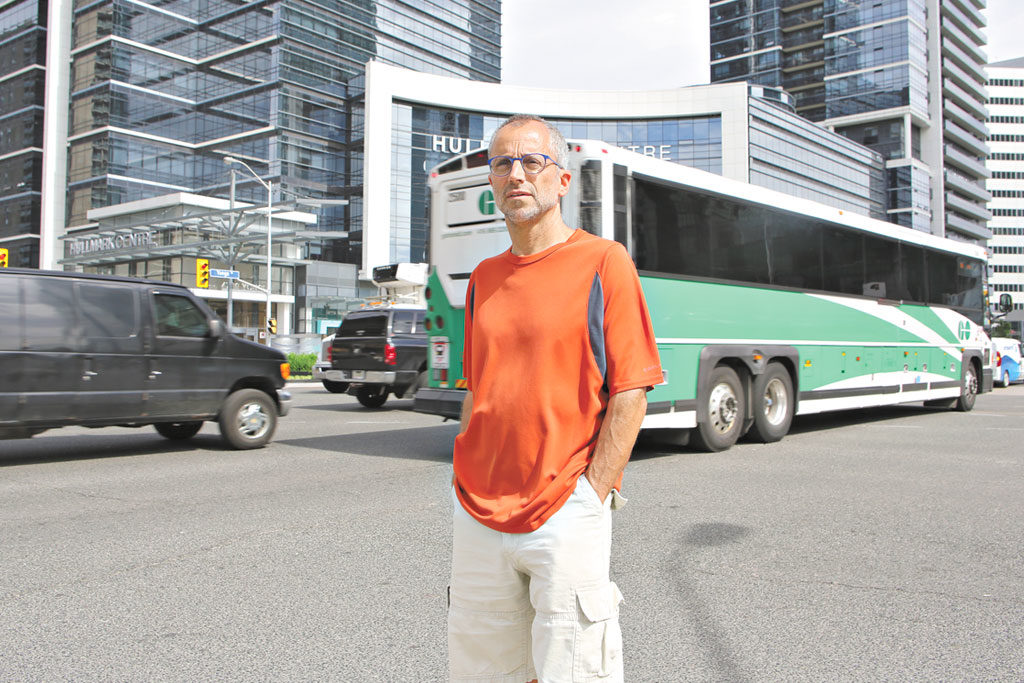
This June saw the beginning of a four-week pilot project that stations police officers at eight of the busiest intersections in Toronto to direct traffic in peak hours. The experiment included the bustling intersection at Yonge Street and Sheppard Avenue in North York.
Some residents are concerned that the project does not go far enough to address congestion in these areas, and the local councillor agrees.
“It certainly is considerably better than doing nothing, but it’s only eight intersections out of hundreds. Yonge and Sheppard is an awful intersection, but a block or so away, Yonge and Anndale is also a terrible intersection,” said Willowdale councillor John Filion. “We could use all eight traffic officers just in this ward.”
West Lansing is a quiet neighbourhood that sits along Yonge Street between Sheppard Avenue West and Highway 401. As such, the residents have long had to deal with byproducts of the heavy traffic on their borders, which has only grown with the buildup of highrise condominiums.
Mike Capotosto, president of the West Lansing Homeowners Association (WLHA), has lived in the neighbourhood for 20 years.
According to Capotosto, traffic direction at the Yonge-Sheppard intersection does not address other hot spots, such as constant congestion at the eastbound entrance to the 401.
“We have condos instead of office buildings being built, and the consequence of that is more cars being added while the infrastructure has not changed at all. It’s the same problem throughout the whole GTA,” said Dimos Zarkadas, of the WLHA.
However, City of Toronto transportation services’ Dave Twaddle said that traffic direction is just one part of the city’s five-year plan to manage congestion.
“I think we recognize that it’s not going to fix congestion alone along the entire corridor. It’s a way of focusing our efforts on those key intersections where we know there’s issues. So it’s only one piece of the puzzle.”
Although the program is still in its infancy, Twaddle said early feedback has been quite positive.
The project will return for four weeks this fall.

