
THERE’S NOTHING THAT halts the eye of a passerby like a home with heaps of curb appeal. And what’s the front door but the focal point to any beautiful abode? Add some cachet to the curb appeal of your home by taking advantage of one of the hottest design trends — reclaimed doors and furniture. Often, homeowners fail to see the wow effect a truly distinct front door can make, which is where the Door Store makes its entry.
The store, located in the city’s architectural and design centre on Castlefield Avenue, has everything a budding interior designer could ever desire. Those who are in desperate search of singular items, whimsical hardware and, of course, gorgeous front doors will not be disappoint- ed. Much of its merchandise is reclaimed from homes undergoing renovations or discovered during Sam Mirshak’s (the store’s owner) frequent trips abroad.
Past pieces have included an $18,000 Victorian entryway or, more modest but quite fetching, $2,000 to $4,000 French and Egyptian doors, better suited for indoor use. Mirshak points out that the front doors they sell for a thousand dollars still top the current craftsman- ship and quality of any national retailer’s new stock.
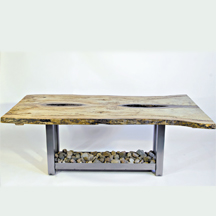
Considering a front door is the first impression a visitor has of your home, why not make it the best introduction possible? But reclaimed pieces don’t have to end after you walk in the front door. According to the fine folks at Urban Tree Salvage, reclaimed furniture comes in as many shapes and sizes as your can imagine.
“Obviously it’s not like going to Ikea,” says Melissa Neist, co-owner of the shop. The company, started by Neist and her partner Sean Gorham, has felt a growth in customer base and business since they opened shop five years ago. “We realized there was nothing else like this in Canada at the time. And eventually we just contacted the city. After a lot of back and forth, we were able to do it.”
What they do is collect discarded wood from Toronto’s municipal forestry dump site — which isn’t far from a tree cemetery, complete with decade-old specimens which, due to disease, poor conditions, urban development or even storm damage, find their final resting place here — and select the pieces that have the most potential. Their prices range from hundreds of dollars for aged log tables to pieces such as large, custom dining room tables that run in the thousands.
“I’ll put it this way: I had a woman come in the other day who saw a table and said, ‘Three thousand dollars? That’s a lot. But, still, I could just go to Pottery Barn and buy something the same price that’s been mass-produced,’” Neist says.
“Here, you’re part of the building process. You pay more, but you’re getting that custom product.”

