
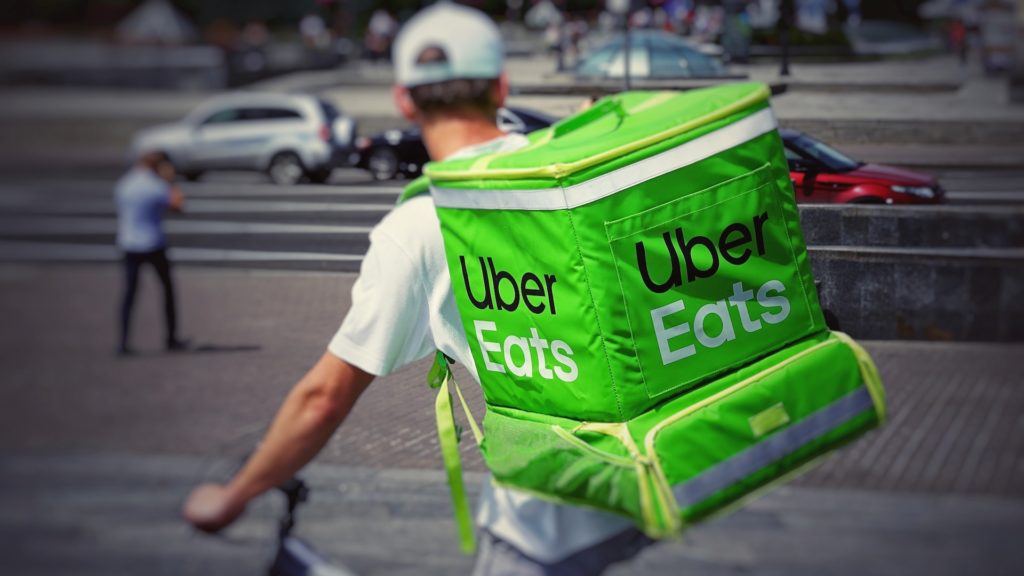
The provincial government announced it will be introducing new legislation that claims to provide app-based gig workers with a number of new protections and rights, including a $15 minimum wage, on Monday. However, labour rights organizers and gig workers themselves say this new legislation will do little to protect gig workers.
Named the Working for Workers Act, 2022, the announcement from Premier Doug Ford and Minister of Labour Training and Skills Development Minister McNaughton noted that workers for app-based platforms such as Uber and Doordash would have the right to keep their tips on top of regular pay periods and the right to resolve worker-related disputes in Ontario under the new legislation.
New minimum wage will only apply to “active” hours
Josh Mandryk, a labour and class actions lawyer at Goldblatt Partners, says the language in the legislation specifies that the $15 minimum wage is only for each work assignment performed by a worker. That means workers will not be getting paid for the time spent waiting for additional assignments.
“Like any job, there’s downtime, but in other jobs, you get paid for that time. With this legislation, it’s like a cashier being paid minimum wage only for the time where they have a customer at the till. Obviously, that would be unacceptable,” he says.
Mandryk notes that the proposed pay structure of guaranteeing minimum wage only while “active” is Uber and other ride-sharing companies’ current pay practice under Prop 22 in California. Gig economy companies spent over $200 million on the campaign in 2020 to convince workers to vote in favour of the proposition. Prop 22, when passed, exempted these companies from classifying their workers as employees under California state law, exempting them from the right to a minimum wage, time-and-a-half for overtime, benefits such as unemployment compensation and expenses reimbursement.
Instead, under the new law, workers would be paid 120 per cent of California’s minimum wage (currently $14 an hour). This minimum wage also only applies to active hours – when they have a passenger in their vehicle or are driving to pick up a passenger. In August of 2021, the Alameda Superior Court of California ruled that Prop 22 violated the California constitution and should be struck down. The ruling is now pending an appeal by Uber.
According to Brice Sopher, an Uber Eats worker and vice president of the union-backed Gig Workers United, the new $15 minimum wage will do nothing to significantly increase the amount he is being paid.
“This job doesn’t have consistent pace. So if I was working in the middle of the afternoon or in the middle of the night, I would not be making minimum wage because of the way [the legislation] counts working time,” Sopher says.
Companies such as Uber incentivize workers with higher rates around dinner time when demand is highest, and Sopher notes that during these times, he would be making more than minimum wage and likely have less waiting time. But during slow periods, Sopher is spending more time waiting around for new orders, and making well below minimum wage. “And that’s exactly the time they won’t count,” Sopher says.
Workers are still seeking classification as employees under the ESA
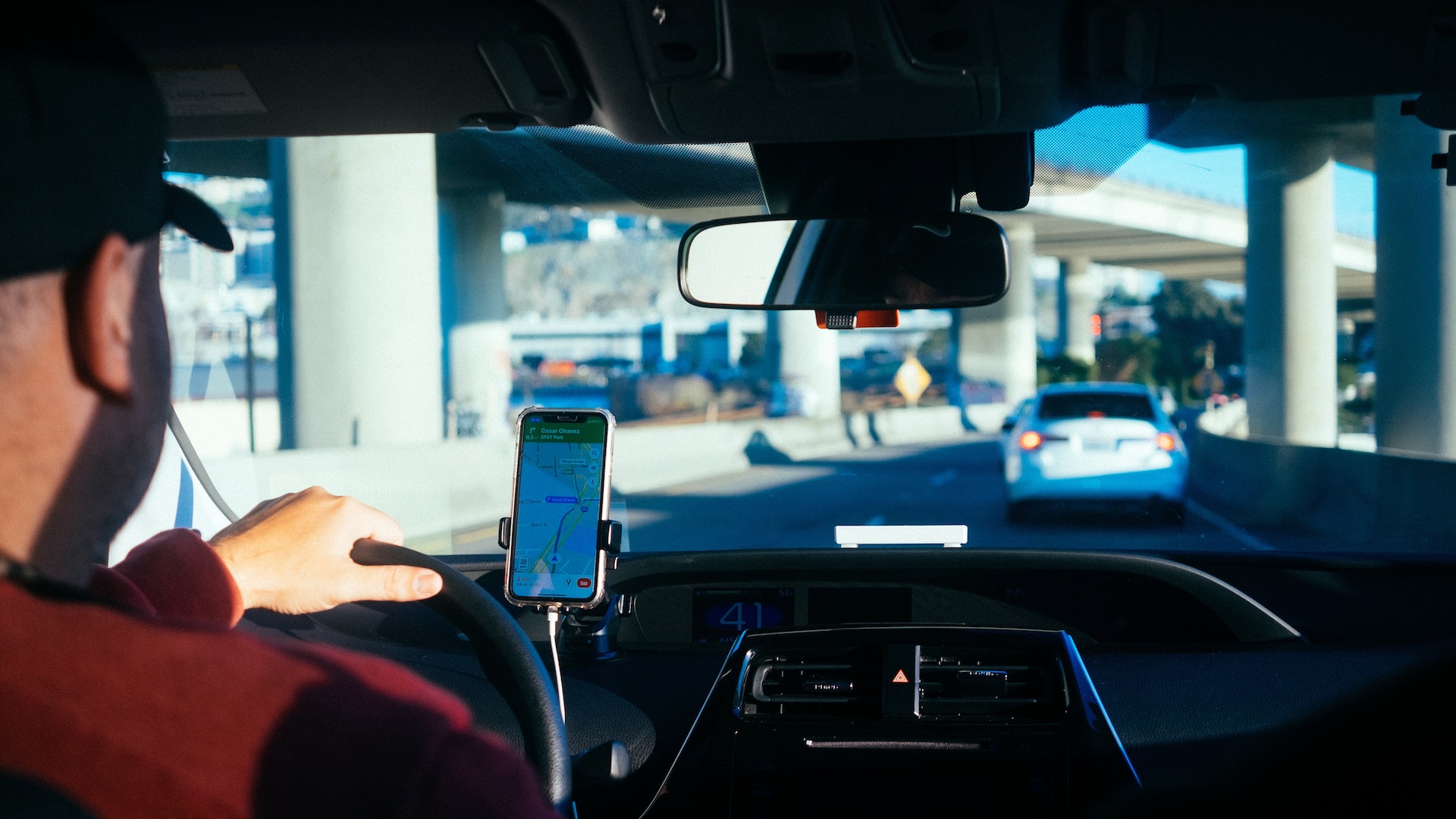
Mandryk says the answer for ensuring workers are entitled to fair compensation and basic protections is simple – classify them as employees under the Employment Standards Act (ESA). There’s even legal precedent to do so.
After an Uber and Uber Eats courier filed an employment standards complaint over unpaid wages. The employment standards officer concluded that the worker was an employee, and was therefore entitled to all the protections under the ESA. Mandryk says the assessment, though it only applies to the worker’s individual case, is certainly significant.
“On this issue of engaged time versus all of their time, the employment standards officer found that the the worker was entitled to be paid for all of their time logged on to the app,” he says. “The approach the government should be taking here is to shore up rights under the Employment Standards Act, and they should be doing that by fforts to curb misclassification, which affects so many gig workers.”
Minister McNaughton’s office has not weighed in on the issue of employment classification, and a government source noted that any claims that the new legislation makes the pathway to workers being recognized as employees more difficult is false.
“We will be the first jurisdiction in North America to bring dental and healthcare benefits to millions of precarious workers (including those in the gig economy) who are currently without them,” Minister McNaughton stated in an email. “These foundational rights have no precedent or template in Canada to pull from. By providing drivers and couriers with these protections, we’re raising the floor, not setting the ceiling.”
“Nothing is preventing a 66 billion-dollar company from providing their workers with higher pay, vacation time, or other protections, tomorrow, if they chose to do it,” the emailed statement also noted.
Sopher says the legislation is creating a lower standard for all workers. “Allowing employers to pick and choose what rights they want to give, what protections they want to offer is a very dangerous precedent,” he says. “If that becomes the norm, then it lowers the bar. What appears to be a raising of the bar for gig workers is essentially a lowering of the bar for all workers in Ontario.”

