
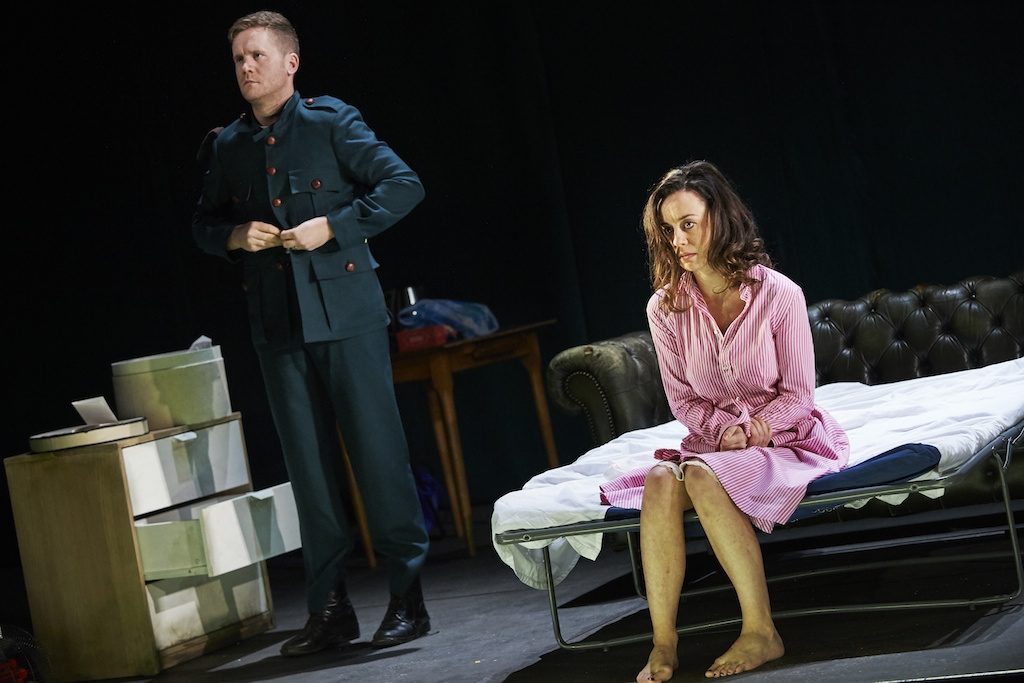
When Irish playwright Sean O’Casey’s The Plough and the Stars premiered at the Abbey Theatre in 1926, the audience rioted. And, given its political undertones, the dramatic work is still relevant today. The same Abbey Theatre, on the centenary of the 1916 April Rising in Ireland, is bringing a new production to Toronto, the first stop on a North American tour. It runs Sept. 14 to 18 at the Bluma Appel Theatre.
Post City spoke with Abbey’s artistic director Fiach MacConghall about the new, contemporary production.
Tell me about the Plough and The Stars.
This play is one of the major Irish plays of the repertoire of Irish theatre. It was quite a revolutionary play at the time. It premiered 10 years after the revolution in 1926 and it’s a play that is essentially about ordinary folks, the kind of anti-heroes. The play is set against a backdrop of the uprising and deals primarily how ordinary folk have to survive through terror, through violence and more importantly through poverty and war. And every generation in Ireland has an opportunity to see this play and see how it might connect with contemporary politics and contemporary society.
It's directed by Sean Holmes, how has he interpreted the play?
He’s the first Englishmen to direct a play for Abbey Theatre. And as a result we see in this production has real contemporary resonance with not only what is happening in the Middle East but also living with this fear of how to survive in this time of gigantic political change.
So someone from outside brought a fresh perspective?
The beauty about him directing the play is that he never had to read it at school, or didn’t known necessarily first hand the history of the play or the history of Ireland, even though his grandfather was from Ireland. He’s quite a radical director, so what he’s done is quite a modern interpretation of the play. So, he didn’t feel enslaved by the tradition of the play.
What propels the story along?
The four extraordinary acts are centred around a couple, Jack and Nora. A love story in the beginning as they set up their domestic situation in a very cramped an overcrowded tenement building. With family around they have very little time to be together, but it is also about the vanity of war and men in military. Jack realizes Nora has been hiding a promotion letter for him to become a commandant in the Irish Citizen Army. The play centres around that journey, and what happens to the neighbours and this couple around a fateful week, the Easter week of 1916 when the uprising occurs. It’s a human story against a backdrop of major war.
What are you hoping local audiences in Toronto take from the play?
One of my dreams has been for the Abbey to visit Toronto. It’s important for us. And the expectation is that we go to Toronto on a much more regular basis. We wanted to bring this iconic play in a contemporary production to Toronto and North American audiences and to try to start a debate and an exchange of ideas with the Abbey Theatre that will continue over the next couple years.
Is it a good date play?
Put it this way, if they’re not talking before the show, they’ll be talking afterwards.

