
Move over Maynard Keynes; the only economic theories worth heeding these days would be the words of Marshall McLuhan. That’s not to say that media companies are financial role models, but rather to suggest that the world is relying far too much on media articles and pundits for their economic wisdom and insights.
Cycles and trends are becoming self-fulfilling based on superficial media stories quoting ‘experts.’
"Boom, crash, recession, recovery…"
In fact even when a story itself is moderately factual and balanced, the headline writers feel obligated to inject a dramatic spin.
A recent article in The New York Times on the "boom" in Toronto commercial real estate is a case in point. Of course, the very fact it is printed in The New York Times adds a layer of dangerously undeserved credibility.
"A rare building boom up north" the headline unequivocally announces.
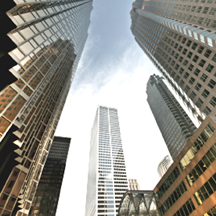
The story text breathlessly reveals that three major office towers are nearing completion in Toronto, in a "torrent" of new office construction: the Bay Adelaide Centre, the Telus Tower by the Rogers Centre, and the RBC building across from Roy Thomson Hall.
Frankly the Bay Adelaide complex has been floundering along for so long (20 years?) that the owners have lost track of economic cycles.
That leaves a grand total of two other buildings (two, not two hundred or even twenty buildings; no country even prints a two dollar bill anymore). Both buildings are financed by public pension funds and both will be occupied by companies consolidating staff from (and thus emptying) other structures, likely attracted by a competitive lease rate and reduced energy costs.
I am not sure that the landlords who are losing these tenants would agree that things are looking up in Central Hogtown.
Financial analysts — and journalists especially — have a very short-term outlook on the world; the economic weather report is different every day. In the past year and a half we have supposedly gone from unprecedented prosperity to "the Worst Recession since the Great Depression" and back into recovery mode.
Meanwhile, back at the three office towers, concrete was being slowly and steadily poured… before, during and after the world supposedly went to hell and back. (Come to think of it, that’s been happening at the Bay Adelaide Tower, on and off, for a literal generation).
If The New York Happy Times story makes people feel better about Toronto (and inspires Canadian bankers to stop pretending that they have no money) then that that’s a good thing, but I would not disembark from Noah’s Ark quite yet.
 Harry Stinson was one of the first Toronto developers to recognize the potential for urban condominiums, to develop residential lofts, and to convert old office and warehouse buildings into residential spaces. His current project is the Stinson School Lofts, an 1894 heritage building in Hamilton, Ont., that he is converting into stylish and affordable lofts.

