
Planners and politicians are forever talking up the value of "neighbourhoods" and unveiling utopian images of various streetscapes after a “makeover” — as if some HGTV reality show crew is going to swoop in and turn a scruffy stretch of Yonge Street into Rodeo Drive.
Tarting up a small, retail pocket is probably going to represent poor value for money spent and years of counterproductive chaos (if the Bloor Street experience is any precedent).
For serious urban returns, GTA governments need to take aim at the elephant eyesores: shopping plazas.
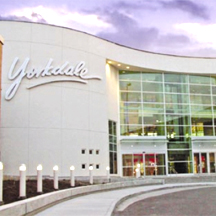
Yorkdale, Square One, Scarborough Town Centre — anywhere there are vast expanses of asphalt.
Instead of development rules requiring so many parking spots per residential unit, flip the thinking upside down and require certain numbers of residential units for every parking spot.
Force large retail centres (the modern day village square) to intensify, to grow vertically not just horizontally.
These need not be forests of formulaic high-rises; consider Parisian-style mid-rises, built on vast platforms above the parking areas.
In fact, the merchant mix can be much more diverse and stable, with their own local customer base. Public transit also becomes coherent and financially viable.
Planter boxes, phony historic lampposts and annual local street festivals are all very nice, but let’s get real. Transportation gridlock is upon us, and no government has the money to fix it. It’s time to unpave the parking lots (with no delusions of paradise).
 Harry Stinson was one of the first Toronto developers to recognize the potential for urban condominiums, to develop residential lofts, and to convert old office and warehouse buildings into residential spaces. His current project is the Stinson School Lofts, an 1894 heritage building in Hamilton, Ont., that he is converting into stylish and affordable lofts.

