
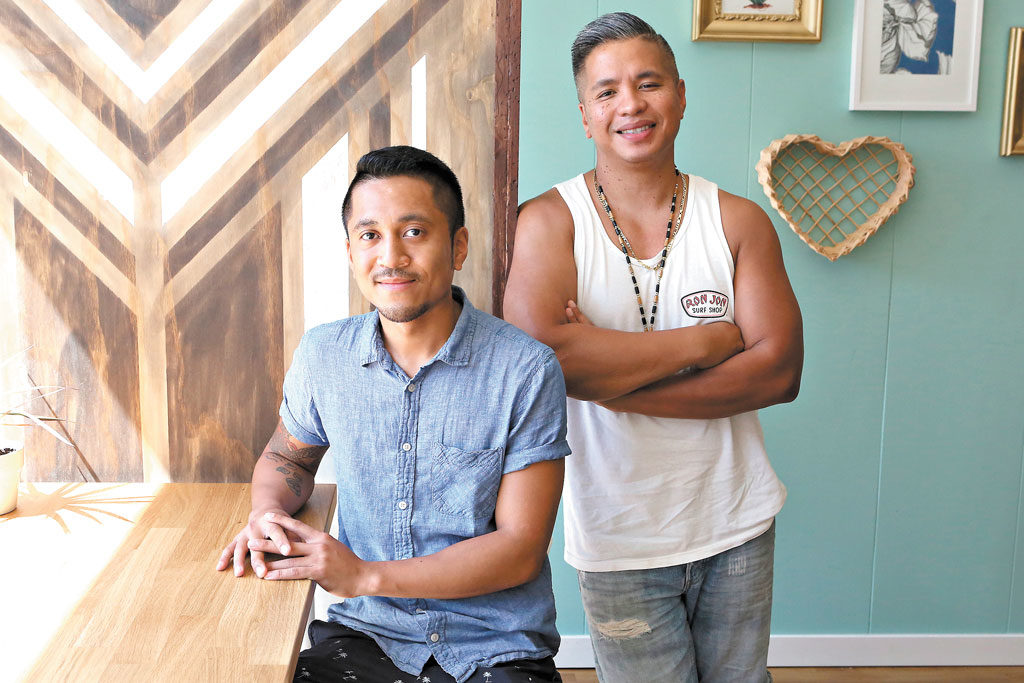
A few months ago, Les Sabilano decided to transform his parents’ Midtown grocery store into his second culinary offering: Lasa by Lamesa, a quick-service joint serving traditional Filipino fare.
When Sabilano opened Lamesa Filipino Kitchen four years back, his goal was to make Filipino cuisine part of T.O.’s foreign food conversation. Sabilano, who spent seven years working front of house at Jump and Canoe, wanted to earn a spot beside gastronomic heavyweights like Thai and Mexican.
In a city that’s home to a hefty portion of Canada’s Filipino population, it only makes sense that Filipino food, steeped in flavour and history, should have a place in our daily contemplation of what to eat. But until now, the cuisine hasn’t received much attention.
Many diners have come to Lamesa, located on Queen Street West, without having experienced this specific southeast Asian cooking before.
Sabilano says, “They ask, ‘Is this Filipino food? Is this what I can expect when I go to another restaurant?’ But, it’s not.”
For the uninitiated, Filipino cuisine is drenched in Spanish, Malay, Chinese and American flavours, “with a little island touch,” says Sabilano. The Chinese brought noodles and soy, hearty stews and sausages arrived with the Spanish, and the Malaysians introduced bagoong — a fermented shrimp paste — and coconut milk. Meanwhile, canned meats, like Spam, came courtesy of the Americans and their military presence. The cuisine of the Philippines is the definition of fusion.
Lamesa’s cuisine marries the Pinoy flavours that Sabilano and executive chef Daniel Cancino grew up eating, with their classical culinary training. (Both graduated from George Brown College.)
Cancino was born in Hong Kong, but lived in Manila for 10 years — “where I developed my palate” — before his family relocated to Mississauga. He started his career as a dishwasher at Kelsey’s but soon realized his passion for cooking, working his way up in kitchens including Union and the former Hudson Kitchen.
While Lamesa examines Filipino food through a modern lens, Lasa, located on Saint Clair West, has a far more traditional focus. “When you go to Lasa,” Sabilano explains, “it’s what you can expect as far as traditional recipes go.”
The restaurant steps into a Saint Clair West space where Kaibigan — Sabilano’s parents’ ethnic grocery store and takeout spot — once stood.
“They’re excited to see the place become an extension of what they worked on for so long,” says Sabilano about his parents.
You’ll find Pinoy staples like lumpia (spring rolls) and savory, slippery pancit (noodles) on the menu at both of Sabilano’s restaurants.
But although Cancino — who started as chef de cuisine at Lamesa — goes avant-garde with duck and corned beef cheek in Lamesa’s fried spring rolls and adds truffle oil to the noodles, the dishes stick to their origins at Lasa. Lasa’s lumpia are pork only, and the pancit is “the way my grandmother or mother would make it,” says Sabilano. That means noodles served simply with chicken, veg and soy sauce.
The menu at Lasa also includes dishes that were popular at Kaibigan, such as kare-kare, Sabilano’s favourite childhood dish.
Sabilano has tweaked his parents’ recipe, resulting in a dish starring oxtail, eggplant, bok choy and green beans stewed in a peanut-based sauce. Bagoong is served as a condiment on the side, adding a briny punch. The result is a distinctly Filipino dish, usually served at fiestas.
However, not all family recipes have been altered. The Sabilanos’ cold, fresh lumpia remain unchanged.
“As we were developing the menu, my dad and some of the others who worked at my parents’ spot gave our kitchen staff recipes and pointers,” says Sabilano.
“It’s all about nailing the Filipino palate,” explains Cancino about Lasa, the word translating to “flavour” or “taste” from Tagalog.
Cancino now brings to Lasa the recipes he’s known for as long as he can remember — dishes such as sweet and sticky barbecued pork skewers with a 7 UP glaze. Before it’s tossed on the grill, the sliced pork shoulder marinates overnight in a (family secret) blend of spices, soy sauce and 7 UP.
Instead of presenting the food in a steam table — common at Filipino establishments — the Lasa team cooks everything fresh to order. But with no servers, customers order and pick up their food at the counter and can choose to take it to go or enjoy it in Lasa’s 24-seater dine-in space.
Since Lamesa opened in 2012, Filipino food has trickled into the culinary mainstream. Just over this past summer, ube (sweet yam) desserts have been splashing shades of purple across Instagram feeds. New eateries, like Platito Filipino Soul Food, have been making headlines. And chefs, like Playa Cabana’s Dave Sidhu, are cooking up Filipino dishes at the ever-popular Sunday BBQ at Cold Tea, Kensington Market’s not-so-secret hideout.
But this is just the beginning. Expansion has always been on the horizon for the duo, and unlike Lamesa, Lasa has been developed with scalability in mind.
So while you head to Lasa for some mid-week eats, Sabilano and Cancino are setting their sights on Mississauga, Winnipeg and Vancouver.

