
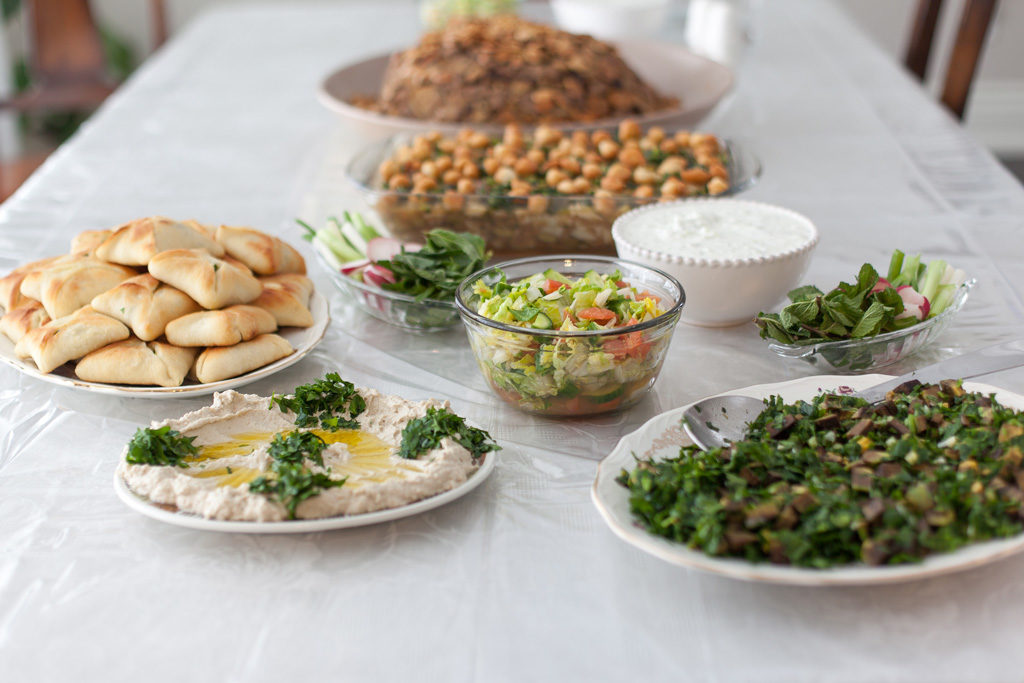
A few weeks ago, I joined my Syrian neighbours for a cup of Turkish coffee and a sampling of Syrian cuisine. The Jalal family began immigrating to Canada in the early ’90s. We exchanged countless stories of food and family. Before we knew it, three hours had passed. This is a taste of the evening.
Najah Harbel spins around her kitchen, getting lost in her cupboards, pulling out bags of she’reya — vermicelli — which she fries in coconut oil, transforming its yellow hue to rich tones of gold and bronze before mixing it in with long grain rice. Coconut oil is new for her: in Syria, she always cooked with zeit nabati (vegetable ghee). She still has a can of it here, sitting in the corner of the kitchen, tucked away on the bottom shelf. It’s a memento for her grandchildren, a reminder of home.
When Harbel greets you with a hug and three kisses on alternating cheeks, it’s as if she’s welcoming you into her family, not simply her home. She’s a graceful, petite woman with bright, cheeky eyes and an ageless smile. Now, she’s a retired math teacher. Back in Syria, Harbel would teach until 12 p.m. and then finish cooking for her husband, Abdul Jalal, and their four sons before they got home by late afternoon. She left Damascus for Toronto after her husband died in 2007.
Harbel shares an elegant home in Lawrence Park with her son, Wasim Jalal; his wife, Lina Baghdadi; and their six children, ranging from two years old to 20. They all call her Teetay. She still loses track of time crafting meals every single day.
“It’s more than just food,” Jalal says about his mother’s cooking. “It’s an art.”
The kitchen counter is quickly covered in bags of vermicelli, long and short grain rice and two kinds of bulgur (partially-cooked, dried wheat). The finer bulgur is for tabbouleh, while the coarser one is used in mujadara, a rice dish with lentils. Short grain rice is always for stuffing.
Teetay brings out a plate of stuffed eggplant; it’s deep purple with a delicate olive oil glaze. She’s embarrassed because it’s a big American eggplant, the sort she typically roasts for baba ghanoush. This dish is supposed to be made with baby eggplants, but her son bought the wrong one. Teetay cuts into the fruit, which is packed with short grain rice, sautéed onions and garlic, along with tart pomegranate molasses, stewed tomatoes and generous amounts of parsley. You can taste every ingredient in each bite; nothing is hidden under a blanket of spices. It’s hearty, yet tangy and fresh.

These square packages of pastry filled with cheese are known fatayer. (IMAGE: LIBBY ROACH)
She follows the delicate dish with a fiery one. Even without the fresh Aleppo chilies she used to dry out in the Syrian sun, Teetay still makes muhammara, a spicy red pepper dip, for her family. Her husband used to love muhammara. The dish hails from northern Syria, where the food is spicier than in her hometown of Damascus. Her grandchildren prefer a milder version, so she makes it with red bell peppers, which she mixes with red chilies, breadcrumbs, salt and extra virgin olive oil. She says her trick is to add lots of pomegranate molasses, tahini and walnuts. Her husband would eat it with all his meals.
Teetay recounts the daily fare she shares with her family. It starts with Turkish coffee mulled with ground cardamom and sugar. A dairy-driven breakfast follows: there’s labneh — thick, full-fat, strained yogurt served on a plate with a moat of olive oil and sprinkled with coarse salt — and a selection of cheeses: halloumi, cottage cheese, cream cheese, baladi cheese (a soft, white cheese) and La Vache qui rit (a breakfast staple in Damascus). The table is also set with olives, eggs, pita bread and za’atar (a blend of herbs). And you can’t forget makdous — baby eggplants stuffed with dried red peppers, garlic and salt, then submerged in extra virgin olive oil.
The weekend calls for an elaborate breakfast with all the fixings: a salad of chickpeas or fava beans with chopped fresh parsley, diced tomatoes and olive oil; along with fatteh — layers of toasted pita squares, chickpeas, tahini and yogurt mixed with lemon and garlic and garnished with sliced almonds and pine nuts.

Maqloobeh, a meat stew served on rice and eaten with a yogurt dip, is the centre of the colourful meal. (IMAGE: LIBBY ROACH)
Back in Damascus, Teetay would come home to cook lunch for 3 p.m. — it’s the meal she spends the first half of her day creating now. There’s always lots of meat, but also plenty of vegetables. It’s a colourful table. The main dish rests in the middle, a big bowl of rice with chicken or a meat stew. Sometimes it’s maqloobeh, which means upside down. Teetay’s eyes light up as she describes it. Sliced eggplant and meat — chicken, lamb or beef — line the bottom of a large bowl followed by rice on top. Then she flips it, forming what looks like a layered cake. The icing is toasted pine nuts and slivered almonds sprinkled on top.
Only a cookbook too heavy to lift with one hand would do justice to all of Teetay’s recipes, but she says kibbeh (often made with bulgur and ground meat then either baked, fried or served raw) and shakriya (lamb shoulder cooked in a yogurt sauce) remain family favourites. Surrounding the main dish sit smaller bowls of baba ghanoush, tabbouleh, msabaha (the Syrian word for hummus) or mutabal — an eggplant dip made with yogurt. There’s usually long grain rice on the table, mixed with peas.

Haraq Osbao balances the indulgence of its garnish of fried dough balls with the sturdy base vegetarian pasta and lentils. (IMAGE: LIBBY ROACH)
“It’s just like rice and the frozen peas you get in bags,” explains Teetay’s oldest granddaughter, Leen, who’s 20-years-old.
Her parents shake their heads. “Back home, in the summer, we always eat the fresh peas,” says Jalal.
Another element on the table is a plate of chopped fresh vegetables, like green onion, white onion and radish. Each component plays a vital role in the meal: they’re not individual courses that stand on their own. They’re interconnected — a taste of rice and peas, chicken dipped in muhammara, a piece of pita with mutabal and then a nip of radish — every bite depends on another.
The day ends with supper; the family comes together for a light affair reminiscent of breakfast with makdous, olives and labneh, but there are fewer cheeses and lots of fruit, which change with the season. Summer in Syria means plump cherries, peaches, apricots and watermelon, while the winter brings bananas, citrus fruits and apples. Tonight, the dinner table is lined with apples.
Teetay shuffles through the spice cabinet. She’s going through her version of baharat, a Middle Eastern spice mix that differs slightly between households; she pulls out black pepper, cinnamon, cardamom, cumin, nutmeg and cloves. Teetay also uses sumac and saffron in her cooking, as well as fresh mint and coriander. When asked what the most important ingredients in Syrian cuisine are, Teetay gathers her family into a huddle to discuss. Her final answer is just one ingredient: salt.
Things are different here, but underneath the oversized eggplants and frozen peas, everything is still the same.

