
In 2012, a report by the City of Toronto’s medical officer of health noted that pedestrians have an estimated 85 per cent chance of dying when hit by a car travelling at 50 kilometres per hour (km/h), but fatality rates decrease to less than five per cent when the car travels at 30 km/h.
It was this report, along with the tragic death of six-year-old Georgia Walsh in July of 2014, that prompted Ward 22 councillor Josh Matlow to put forward a motion to reduce speed limits in Toronto.
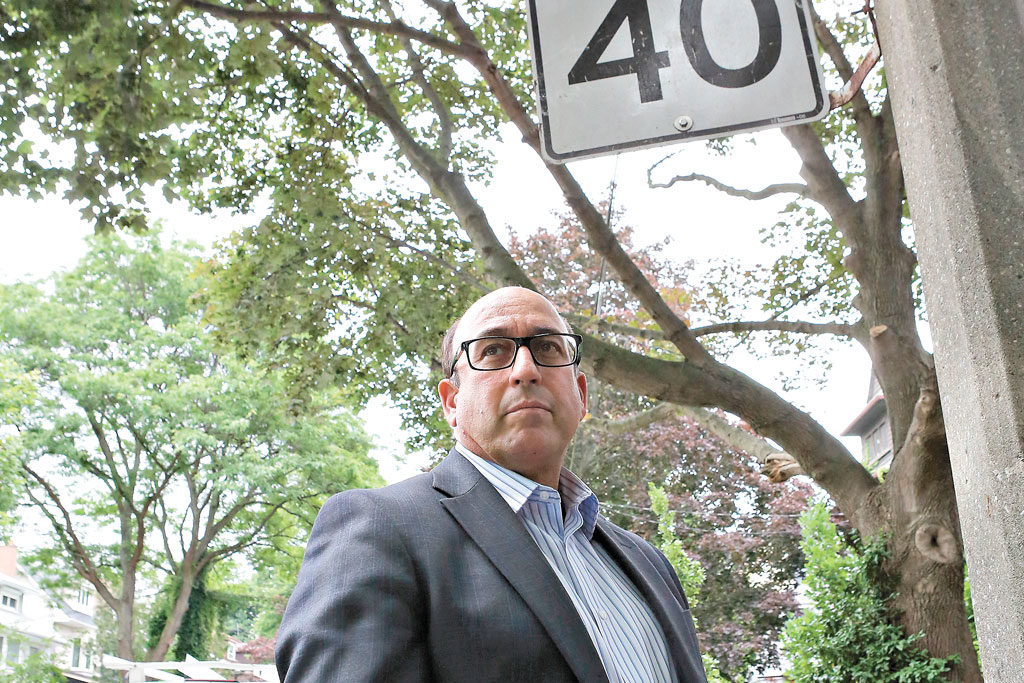
The decision to lower speed limits from 40 to 30 km/h on residential roads received unanimous support from the Toronto and East York Community Council in June.
The current change affects about 387 kilometres of local roads in the old cities of Toronto and East York that are now posted at 40 km/h. Toronto and East York Community Council staff estimated that changing the signs (over 4,400) will cost about $1.1 million and take roughly two to three years to implement.
Nazzareno Capano, manager of operational planning and policy with City of Toronto, Transportation Services, said that although a few roads may see changes to the bylaws and street signs by the end of this year, the majority will occur when Toronto City Council approves the project’s budget in 2016.
But according to Capano, council members may push for more changes this fall.
“I have heard some indication from certain councillors that they may want some 50-kilometre roads reduced to the 30 kilometres as well,” said Capano, who noted that it would increase the price tag from $1.1 million to roughly $1.7 million. Capano also stated that if the city hires on additional temporary staff to accelerate the program, the cost would increase by $165,000 for every additional two-person crew.
Coun. Matlow said he would support the reduction on “the few remaining local neighbourhood residential streets that have 50 kilometre an hour speed limits” but not on arterials.
“But we found that a majority of the collisions generally do happen on our arterial roads,” said Capano, before adding that many of the accidents on residential roads stem from poor driver behaviour, rather than speed.
Councillor Jon Burnside agreed. Although Ward 26 — where little Georgia Walsh was hit and killed by a vehicle last year — does not fall within the jurisdiction of the Toronto and East York Community Council and will not be affected by these changes, Coun. Burnside believes the opportunity to pursue them through the North York Community Council still exists. Although he said a more effective way of promoting public safety would be to better enforce the bylaws already in place.
“When Mayor Tory wanted to reduce gridlock downtown, he didn’t add more parking restrictions, he enforced the ones already in place, to wonderful effect,” said Burnside in an email to Post City.

