
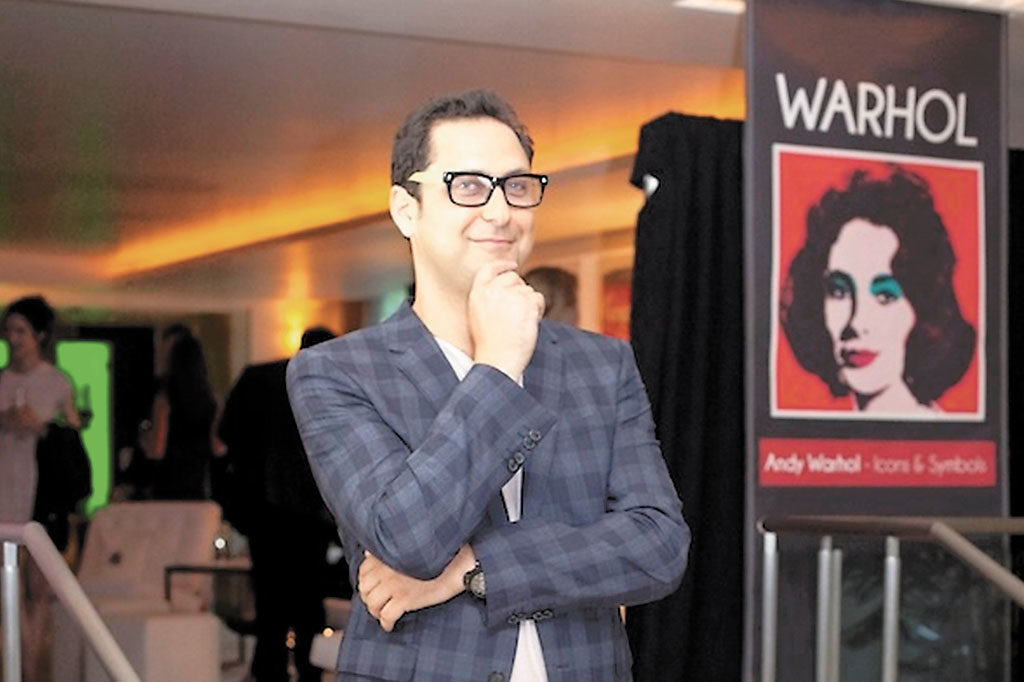
Ron Rivlin has only been an art collector and gallery owner for a few short years. But he’s already got one of the largest private Andy Warhol collections on the planet, and he is showing off most of it at a pop-up version of his Los Angeles–based Revolver Gallery, opening this month in Yorkville.
But how Rivlin got to this point is the stuff of legend. And it all starts in Thornhill, north of Toronto, where the cunning teenager decided to get into the ticket-scalping business at the age of 13.
“I was making hundreds of dollars a week, but eventually it interfered with school, so I shut it down and focused on the tour.”
The tour in question is, of course, the Grateful Dead’s, on which Rivlin sold cheap imported Guatemalan clothing to Deadheads throughout North America as well as on the street in front of the Eaton Centre and the high schools in some of the city’s more upscale neighbourhoods.
“I would drive around, 16 years old, at lunch breaks for schools like York Mills and Forest Hill Collegiate and pull up in my van, long hair, selling this clothing out of an orange bus.”
Eventually, he realized that permits are something of a requirement, especially when selling at rock concerts, something about copyright infringement. He ended up living in California, with eight surfers, broke. The first chapter ends when the engine blows on Rivlin’s bus just outside of Lake Louise where he slept in his van in the snow, freezing, no heat, with both him and his dog covered in lice. Rivlin threw in the towel, headed home, cut his hair, went back to school and, at least for a short period of time, thought about a real job.
Rivlin eventually attended the University of Western Ontario, minoring in the growing rave business, both in London and in Toronto where he threw parties for 10,000 people at the Docks nightclub. Everything was going well until he moved to Montreal and had a run-in with a group of fellas dubbed the Hells Angels that left him flat broke … again.
“They insisted I work with them, and I refused, and they pretty much ruined me,” he explains. “I had to leave and hid in my parents’ basement where I started my talent agency. Turns out I was a natural at being an agent.”
Rivlin got in on the ground floor of the growing wave of hip hop just before it spread to the suburban mainstream on the heels of breakthrough artists such as Eminem. Soon, Rivlin had a massive company and started investing in nightclubs, restaurants and more.
“And here I am today, a little more than a glorified Forest Gump,” says Rivlin. “I never ever pursued anything that I ended up doing. This all happened by circumstance.”
Rivlin’s interest in Warhol began with the late artist’s investment potential. That and his paintings of Mick Jagger led Rivlin to auction after auction, and he began to accumulate Warhols like they were going out of style.
The new show will be housed in a former Gap store at 77 Bloor St. W. until the end of the year. Admission is just $10, $5 for students.

