
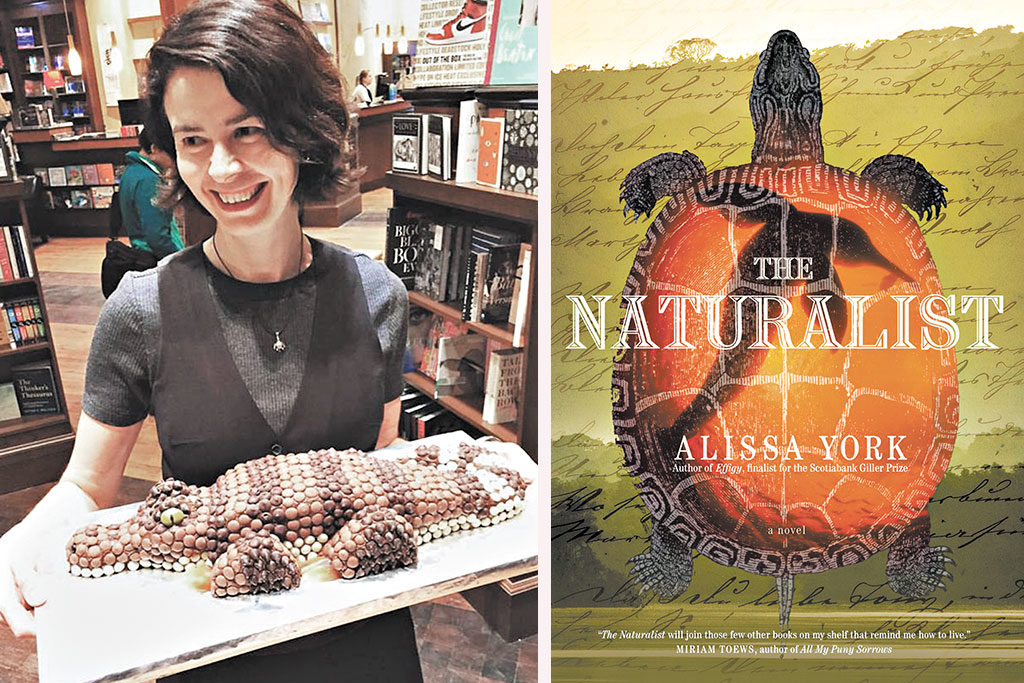
After three novels — including her Giller Prize shortlisted work, Effigy — and one collection of short fiction, Toronto writer Alissa York knew it was time to take a leap outside of her creative comfort zone, one that would take her all the way to the Amazon.
The vast network of dense forest and winding rivers that spreads out across eight countries is where York’s latest novel, The Naturalist, takes place and also somewhere she has always been fascinated with.
York says the process of writing The Naturalist started about five years ago when she was applying for the Chalmers Arts Fellowship, which is for artists of all kinds in Ontario.
“They want artists to stretch themselves, so I asked myself what would stretch me, and right away the answer came back, the Amazon,” she says. “I felt I had written enough at that point to be able to take this on.”
In the novel, an amateur naturalist is about to embark on a journey back into the Amazon when he dies in an accident. His only son goes in his place, alongside his stepmother and her friend, all of whom are affected and changed by the experience in different ways.
Research for the book took at least a couple of years, and part of that process involved going into the Amazon. York describes her time there as thrilling and notes that The Naturalist could not have been written without her actually making the trip. “There were so many key scenes that came out of that experience,” she says.
York herself wanted to be a naturalist, and in the process of writing this book, she got to inhabit that world and in a way do something she dreamt of doing when she was younger.
“I think that a huge part of the [novelist’s] work is inhabiting different lives, and that’s a huge draw to the work,” she says. “Writers start as readers, so there’s already a draw to inhabiting other lives even at that point.”
When asked to describe what it feels like to finally finish a novel, something that can take years to produce, she says there is an immense relief but also sadness.
“You feel relieved, exhausted and bereft because you spend so long with these characters. Characters do become people you are spending time with,” she says.
“Working on a book is the source of a large part of the meaning in your life, so when it is gone you’ve lost that part of yourself until you start work on the next project,” she explains, which is why she tries to have at least some research overlapping for the next book.
“Writing requires multiple steps off of a cliff.”

