
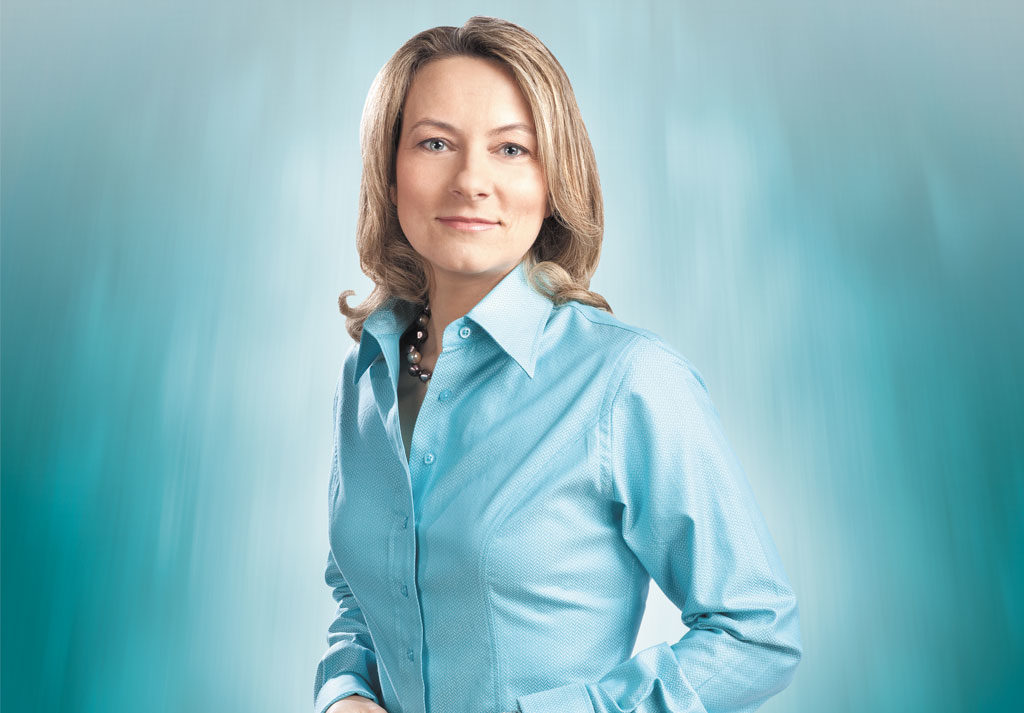
It’s the morning after the federal election, and the atrium of CBC’s offices on Front Street is bustling with the tear down of their election night set. Journalist Adrienne Arsenault is in the lobby admiring the set before it’s stripped down.
Arsenault was busy during the election period covering an angle many might not have considered.
“I was in White Dog in northern Ontario, which is a small reserve, profiling two twentysomethings who worked to get the vote out,” she says.
The turnout of voters in the reserve was significantly higher than the last federal election. “That’s largely due to kids [on the reserve] like Deanna [Carpenter] and Kirk [Cameron],” says Arsenault.
However, the longtime CBC correspondent for The National is here to talk about a more dangerous assignment: coverage of the Ebola crisis in 2014.
Arsenault, along with producer Stephanie Jenzer and videographer and editor Jean-Francois Bisson, spent a week in Liberia while the crisis was raging, the only Canadian broadcast team to do so.
For their work, the team was awarded the 2015 International Emmy Award in the News category this past September.
Jenzer says the assignment was “weeks in the making. And we were unanimous on it being the three of us because we knew we could work together as a team and were all willing.”
The trio each agreed independently to go to Liberia knowing it was the right thing to do. There were obvious risks. An NBC cameraman contracted the virus while there.
“I’m comfortable with [Arsenault and Bisson] in a high-risk environment, whether it’s a war zone, disaster area or health emergency like this was,” says Jenzer.
She and Arsenault have known each other and worked at the CBC, separately and together, for nearly 20 years and have also covered multiple Olympics together. Bisson has joined them on assignments since 2011 and for the most recent Games in Sochi.
There were special preparations for this particular assignment.
“We drilled repeatedly, with help from infectious disease specialists,” says Arsenault. “It was several weeks after we were assigned before we got on a plane, which is incredibly unusual for a disaster assignment.”
Once they arrived, they were working 16- to 18-hour days, constantly adjusting to the conditions.
Arsenault was struck by the societal changes, with everyone avoiding physical contact.
“Liberia has a very open, gregarious culture, but now, everyone was perceiving everyone else as a threat. There weren’t even fist bumps — people would tap elbows, at most. When I met the president, the first thing I said was, ‘I feel incredibly rude not shaking your hand,’ but she said, ‘We can’t.’ ”
The president wasn’t allowed to touch anyone.
Getting subjects to open up in such a guarded environment was challenging, and Arsenault credits her teammates.
“J-F is one of the nicest people on the planet. He has this big broad smile that makes kids giggle. He instantly puts people at ease — and he has a beautiful eye. And Stephanie … we’ve been in sketchy situations, on assignments where people didn’t want us there. She’s very kind with people and whip smart at handling tense situations.”
The respect is mutual. “Adrienne and Stephanie are both such compassionate people,” Bisson says. “Adrienne, to me, is such a passionate journalist. She loves her job and is so good with people.”
Arsenault attended St. Clement’s School, where, she says, “my friends say they knew I’d go into journalism before I did.”
“My dad was a TV director, who did comedies mostly, like King of Kensington — but also shows like Hockey Night in Canada. He and my mom were among the first people to open [television channel] CHCH. So I grew up on sets.”
Nevertheless, she wasn’t sure television was for her. She attended Western University, first getting an honours degree in political science and then a master of journalism, where she specialized in print.
“I wanted to understand how to write. But I became a go-to for television at school. There’s so many different layers of storytelling television gives you.”
As for CBC, joining The National was fate.
“It was a different era, when you could get an interview right out of journalism school,” Arsenault says.
She received an interview for one of CBC’s radio shows, As It Happens, but went to the wrong floor of the wrong building, as the TV and radio departments were in separate buildings at the time.
“A man in a suit asked me if I was lost. I didn’t know at the time, but he was the executive producer of The National. He took me to his office, we talked a bit, he picked up the phone, then put it down and said, ‘I’m not going to call them. Would you like to work here?’ I was an editorial assistant a day or two later. Never made it to As It Happens — still!” she says.
As for the Emmy, both Arsenault and Jenzer have won awards before — a Gemini for a documentary on a hotel explosion in Mexico in 2011, for example — but it was the circumstances of this one that they’ll remember.
“Going to the [Emmys] ceremony,” says Arsenault, “was surreal, because it was a year to the day we’d landed in Liberia.”
And the credit, Jenzer says, is due to their team effort.
“The analogy of a well-oiled machine really works, because of our experience in what we do, for the CBC,” she says, adding that, “It was an honour to go to Liberia because not a lot of outlets did.”

