
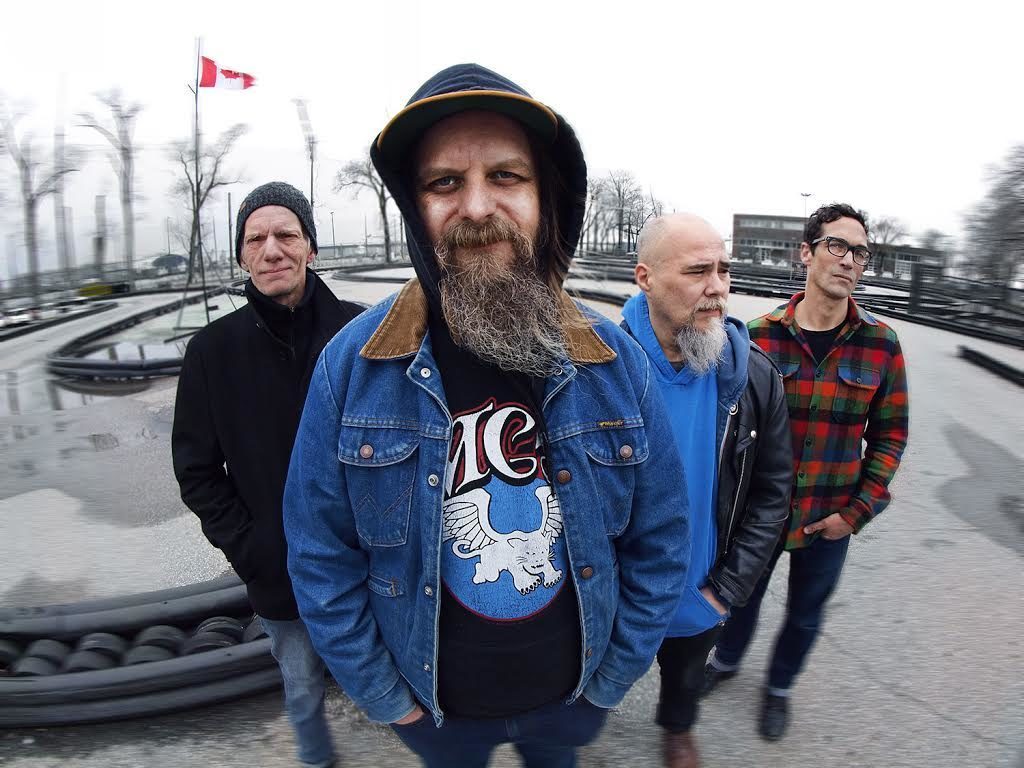
Change of Heart was formed in 1982 by Ian Blurton and Rob Taylor and was, for a time, one of the most progressive and intriguing bands in Toronto. Just past the punk scene, and a step ahead of the massive indie music revival, the band strived to set themselves apart, to make music that was unique and on par with other notable post-punk bands from south of the border such as Hüsker Dü and the Minutemen.
The band reached new heights of popularity and critical acclaim after the release of their 1992 album Smile. It was originally conceived as a double LP, but with budget restrictions it only came out on CD and cassette. Now, a quarter-century later, it is finally getting the royal vinyl treatment it always deserved, and fans get a chance to relive some of the best music of that era to come out of this city as the band is playing a special release show at the Horseshoe Tavern on July 22 with B.A. Johnston and Sianspheric opening.
Post City sat down wth Blurton over a plate of Bacchus chicken roti to talk Smile, the Queen West scene and more.
What inspired you to reissue Smile?
It was actually Label Obscura's idea. Tim Lidster, who runs it, came to us and asked if we want to do a double-vinyl release. The album was originally envisioned as that, with the gatefold and everything, but it never came out that way. We thought it was probably a good thing if they wanted to put up that kind of money. It's an expensive proposition and it just seemed like the right time to do it.
Did you have to get it pressed in the States?
No, there's a new pressing plant in Burlington called Precision and it's getting pressed there.
So tell me about the circumstances surrounding the original Smile session.
It was pretty weird. We had like $3,000 to make a double record back then. Our drummer, a long time band member had just quit and we had all these songs, and we were already demoing them. We asked Glenn Milchem (Blue Rodeo) if he was interested in playing drums. Then, Michael-Phillip Wojewoda, who was the producer on our previous records, had the idea that we should do the highest quality we could get for $3,000 and that meant recording completely live off the floor in Reaction Studios. So we ended up inviting people to play horns and cello, and sing backup. So it was a real coming together. We did 22 songs in four days for $3,000. It was just madness, you know.
I read that you guys were working 18-19 hour days during the session.
Michael especially, being the producer, he’s actually mixing the track live as we would play it… if we needed the guitar louder than the chorus he had to do it then. The whole thing was live, not just the playing the actual mix and everything. So it was intense.
What kind of creative influences were percolating for you at the time?
We were definitely listening to the Beach Boys. The idea kind of came from late night drives when we'd just make up stuff. We had this ongoing dialogue about David Crosby kind of making his way through the remnants of the '60s, the optimism, and just the Reagan era, what the '80s brought. Capitalism was back in fashion and things like that. The idea of things just not being finished, the ideas of the '60s had not been fulfilled, and even the Beach Boys Smile record was also unfinished. And there were these great disasters. It was a combination of all those things.
So there is a lot of social and political commentary on the album?
Social, political, environmental. We had the Exxon Valdez disaster happen, and actually, the captain’s call from the Valdez is on the record. And there is a rainfall, and it’s the first rainfall after Chernobyl. Just little things like that. We were really into collecting tapes. The whole record was this huge okay well, like what do we got, let’s go all in on this.
Were there Toronto bands that were pushing and influencing Change of Heart?
Honestly, there were a lot of bands we didn't like from Toronto and didn't want to be anything like and that was more the influence. I know that sounds kind of harsh, but most of the bands we loved were the Minutemen, Hüsker Dü, Meat Puppets, pretty much the lighter side of SST catalog. Twin/Tone, the Replacements, the Service from Chicago, most people don’t know them but they're a great band, and the Beat Farmers. Bands that were out on the road, eating shit and doing it, you know.
You've given a lot of credit to Gord Downie and the Tragically Hip for the way they handled the music business.
Absolutely.
Apparently, you opened for them at a crazy show in Texas when they were breaking way back when.
It was just mayhem that night, and I can’t even remember all the crazy things going on. Literally, there was someone in a wheelchair on the stage, a pregnant lady was laying on the stage, barf, brawls. It was nuts.
What did the release of Smile do for the band and your career?
A lot, we basically dumped every idea we had in, so a lot of that time period was over and that was a final thing, all of our ideas up until '92, and it started to get a little bit easier after that.
Do you feel like it set the band apart from others in the city?
I think so. The band was right in the middle, too. We weren't that heavy, but those were the people we knew and hung out with. It was this weird dichotomy of playing a show with Barenaked Ladies but feeling at home at a punk rock show. I think whenever there is just a band that exists to play music, it's hard to decide where to go and where to put your energies. And it's hard for the audience to decide, too.
Would you do anything different with Smile, looking back?
No, I wouldn’t change a thing. Well, I’d redo the vocals, I mean I hate the vocals on the record.

Do you continue to make music for the same reasons?
Ya, I think. We were teenagers from Bloor West Village and had a basement jam space. And I think it’s the same kind of feeling. Whether right or wrong, we always felt that what we were doing was kind of not being covered by other bands, and we thought it was good you know. The late '80s, early '90s Canadian pop music was like painful in a lot of ways, chart wise. Like Frozen Ghost…. We actually chased Frozen Ghost one night on the highway back from Thunder Bay in the van. We recognized them and tailed them all the way home and they just got really freaked out it was amazing.
You guys were together for a long time.
We started in '82, like I was 16, he was 18. We worked so hard from '82 to '92, so when we finally did get that little ray of sunshine when we could finally tour some more, there was a burn out factor involved in being independent for that long. Ten years is ridiculous now that I think back on it, god. My favourite bands rarely last three records you know.
Do you think any subsequent bands you are involved with, whether C'mon or Public Animal, are overshadowed at all by that Change of Heart legacy?
No, I don't think so. Each band has its own set of fans. I know there are a lot of Change of Heart people who don’t like C’mon and that’s all right. They are all different bands. Part of the the problem with Change of Heart was that we kept changing members. And the most important for me was when Rob Taylor left the band. We started the band together, you know. He wrote a huge chunk of the lyrics, did the artwork, was the bass player, he wrote music. He was very integral, and to lose him… Honestly, I think his lyrics are on par with like, I don’t know, Samson (The Weakerthans) or Downie (Tragically Hip). He's a really good lyricist. And I’ve been lucky enough to sing his lyrics for a long time.
Tell me about the first Change of Heart show.
The first real show was at the Beverley Tavern, opening for the Wayouts. I actually tried out for that band as a drummer when I was 14, but they didn't use me because I was too young. This was their last show, so lots of people were there. I was terrified and I don't even know if I turned around and faced the audience, actually.
You kind of grew up in the original Queen West scene. What was that like?
Amazing. It was everything, all types of music. CKLN was a very powerful radio station back then, and they had the first hip hop show Saturday afternoons with all the best music from New York. They had punk shows, metal shows. Brian Taylor from Rotate This (record store) had a radio show called Aggressive Tendencies. It was so small too. We were like in the post punk scene, so a lot of the original punk bands had gone, but we’d met them through remnants. For me, I mean Keith Whittaker from the Demics was really amazing to me as a kid. Vince from Swollen Members and Cardboard Brains was amazing. We were so young too that we got protected a little bit and the scene was so amazing because of the gay village, playwrights, punk rockers, funk rockers, reggae dudes. It was so small, I mean it still had that small town feeling in the early '80s so there was lots of cross pollination.
When Change of Heart broke up some described it as the end of era indie music in Canada. Do you see it that way?
No, that time period I see as a beginning for indie music in Canada. It could have taken off a little differently but I think that’s when it really started to be a thing more than the 45 to 100 same people at every show.
The band is doing seven shows to support the new release. Who will be playing?
(In Toronto at the Horseshoe) there are nine of us from the record. Michael-Phillip Wojewoda, who produced the record is doing a live mix. Then there is Glenn Milchem, Rob Taylor, Mike Armstrong who played percussion with the band on two separate occasions, Bernard Maiezza on keys, Anne Bourne and cello and singing, John Borra and Catherine Rose doing backups. So it's going to be nice. The rest of the shows will be the four-piece of Glenn, Rob, Bernard and I.
The return of Change of Heart promises an evening of incredible music and a fond look back at a band that helped define an era in Toronto. Want a Music City? Give some of these bands a star on the Queen West sidewalk. See you there!

