
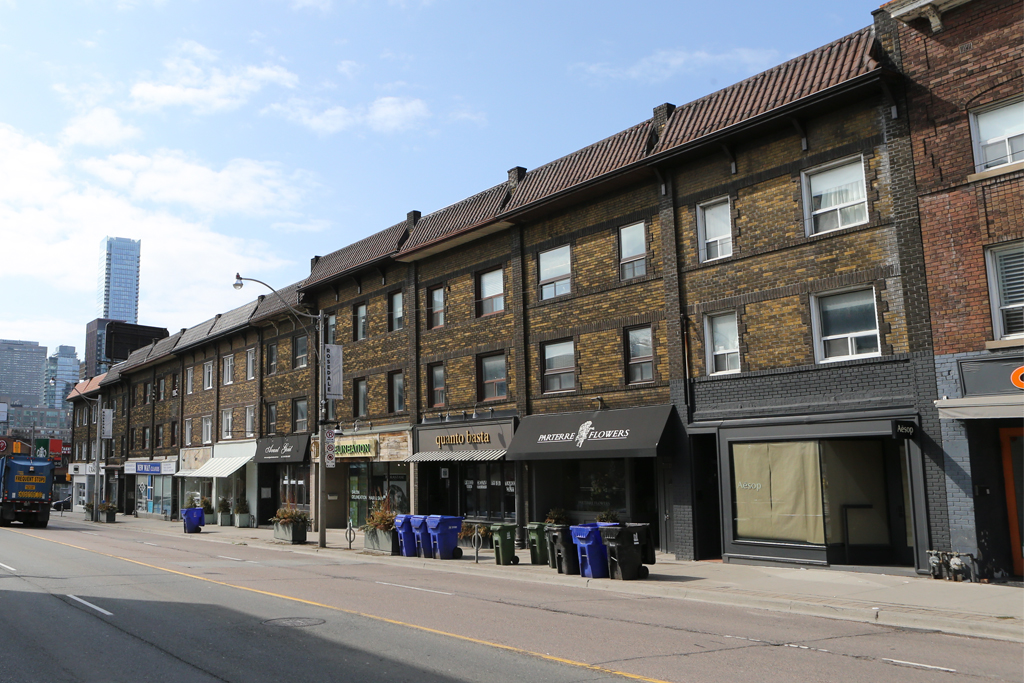
Business owners across Toronto are petitioning the federal government for a commercial rent freeze during the COVID-19 lockdown. If they aren’t thrown a much-needed lifeline soon, they say the city risks losing its mom-and-pop shops and family-run establishments.
According to a recent survey by Save Small Business (SSB), 70 per cent of small business owners expect to default on their commercial rent by May 1. Meanwhile four in 10 businesses surveyed by the Canadian Federation of Independent Businesses (CFIB) did not pay their April rent in full.
SSB is a grassroots coalition of more than 30,000 businesses across Canada. The SSB joined forces with the Toronto Association of Business Improvement Areas (TABIA) in response to the crisis.
Local groups like the Corktown Residents and Business Association (CRBA) have also conducted surveys of their own that have had similar findings.
“Over 75 per cent of business owners that responded to our survey in the Distillery District and Corktown have indicated they won’t meet their May rent obligation,” said Aaron Binder, president of the CRBA. “Commercial landlords are still expecting businesses to pay up after being shut down.”
Corktown Business Owners Call for a Commercial Rent Freeze
75% of respondents to our recent survey cannot pay May rent. Read our Press Release to find out more.
Read here: https://t.co/xB5vBflY1L#SmallBusiness #RentFreeze #onpoli #topoli pic.twitter.com/gWXQKpklzg
— Corktown (@CorktownTO) April 9, 2020
While 90 per cent of those surveyed have taken alternative measures to help generate revenue, only one of 10 have found them effective.
Proposed relief
TABIA and SSB have submitted a proposal to the federal government to support independent businesses during this difficult time.
“We’ve put forward a common sense rent proposal,” said John Kiru, executive director of TABIA. “It would create a framework for landlords and tenants to work together so that no small business will need to permanently close because of this public health crisis. If we don’t deal with the rent problem right away, we’ll see closures in communities all across the country.”
The group’s proposal urges the federal government to provide grants to landlords that waive rent to small business tenants. It also calls for a moratorium on commercial rent lockouts and encourages banks to pause property debt payments without interest. Its four-pronged approach also aims to ease property tax and utility payments.
The program would apply to businesses that make under $5 million a year. The groups argue these changes would help prevent owners from taking on unmanageable debt.
We’re asking @fordnation to help small businesses like ours to #keepthelightson by putting a freeze on lockouts and creating a rent relief fund. This isn’t just about us: just as small businesses struggle to make rent, small landlords are vulnerable if tenants don’t pay.
— The Eglinton Way BIA (@EglintonWay) March 31, 2020
Government relief
The program is meant to complement the government’s 75 per cent wage subsidy program. Business owners can also apply for the Canadian Emergency Response Fund, which provides $2,000 a month for people who’ve seen a significant drop in income.
Starting tomorrow, Canadians – including small business owners & entrepreneurs – can apply for the ?? Emergency Response Benefit. We’re staggering the days you can apply based on your birth month, so that the system won’t be overloaded. Please check out which day you can apply ⬇️ pic.twitter.com/80Q5J7k69n
— Mary Ng (@mary_ng) April 5, 2020
Meanwhile, other local organizations and advocacy groups are trying to help out in other ways. One Midtown BIA has set up a $15,000 Digital Growth Fund, split up into $500 grants to help local businesses go digital. The advocacy group SaveHospitalityCA also formed to get the restaurant industry the support it needs to rebound.

