
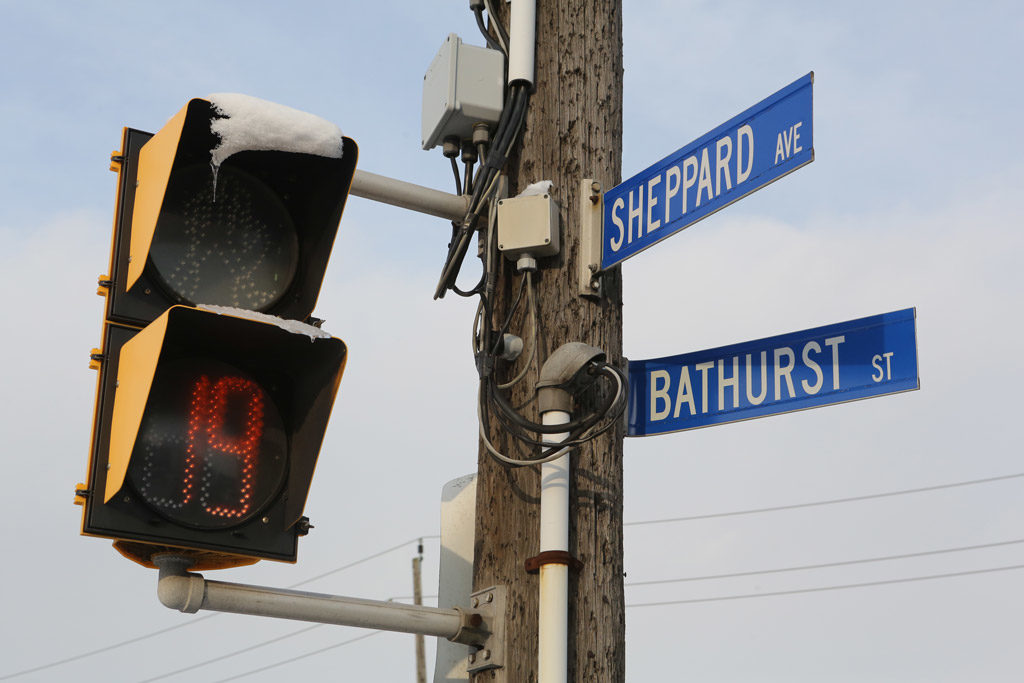
On Dec. 6, an 87-year-old woman was struck and killed by an SUV while attempting to cross the road near Bathurst Street and Sheppard Avenue West. There are two seniors’ buildings in the immediate vicinity. The victim was transported to the hospital where she later succumbed to her injuries.
By the end of that single day in December, at least another 20 Toronto residents were hit by vehicles. Last year, there were 42 pedestrian fatalities in Toronto (at press time), the most since 2002, representing 55 per cent of all traffic fatalities. Of those fatalities, 27 were senior citizens.
At least four pedestrians over the age of 80 were killed at various North York intersections last year.
A 92-year-old man was hit by a car at Avenue Road and Felbrigg Avenue in May, and in August, an 83-year-old woman was killed by an SUV at Finch Avenue West and Talbot Road.
Ward 10 councillor James Pasternak said traffic congestion and safety is the number one inquiry at his office.
“We are totally swamped with requests for lowering speed limits, installing stop signs, installing speed bumps and putting in turn restrictions,” he said.
According to Pasternak, the area has a lot of cut-through traffic from main roads and Highway 401.
“We need to understand that, with an aging population, it makes it even more essential that everyone participate in driver and pedestrian safety,” Pasternak said.
Toronto Police Service (TPS) constable Clinton Stibbe noted that the TPS is seeing an increase in pedestrian accidents in residential areas versus the downtown core. Stibbe said areas such as Bathurst and Sheppard “have a higher concentration of seniors living in the area, and they are more likely to be involved in a collision that results in a fatality.”
On June 10, 2016, Toronto City Council unanimously voted to enact a five-year Road Safety Plan in order to reduce road fatalities to zero.
Maureen Coyle, an active member of Walk Toronto, said city staff has to endorse a plan that uses international best practices. Coyle said these practices put pedestrians first and reflect the principles of Vision Zero, which started in Sweden, that have led to other cities around the world having safer roads and walkways. The Vision Zero plan aims to reduce speed limits, place speed cameras in school zones, change traffic patterns and identify safety improvements for areas with children, seniors and people with disabilities.

