
In the 1960s, as prepackaged food was on the rise, people began to wonder where their food was coming from.
This was something I became interested in when I had young children. I wanted to get them the best quality food I could, so I started growing my own vegetables and received my first three chickens in 2007.
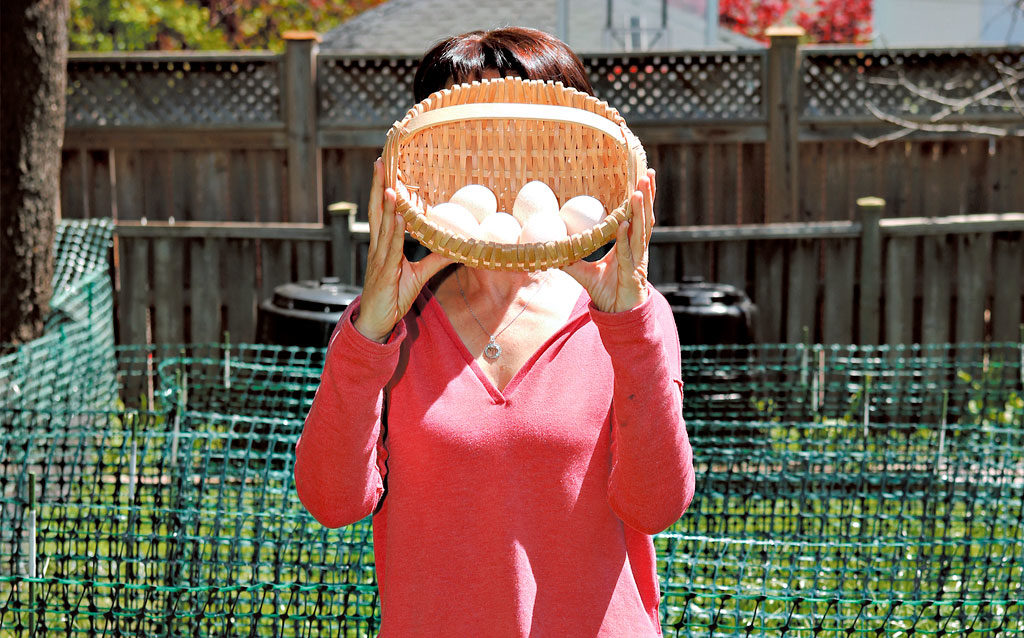
I quickly realized that backyard hens tied in perfectly with my environmental interests. Not only did I eliminate driving to the store and having an egg carton to dispose of, I also composted my vegetable scraps and fed them to the chickens. They then processed those scraps into nitrogen-rich fertilizer, which I would then use to grow food. It became a full-circle environmental approach.
What I’ve found is that people who are against urban farming tend to have many misconceptions of what it’s really like.
People think they are noisy, smelly and pose a health risk. That might be true if you have 50 chickens in your yard, but urban farmers like myself are only looking to have up to four hens.
Another objective of this is the humane treatment of animals. For every chicken that’s in a backyard laying eggs, there is one less factory farm chicken. A factory farm hen spends its entire life on the equivalent of an 8.5-by-11-inch sheet of paper and can’t exhibit any normal chicken behaviour. So urban farming really is humane and allows chickens to be chickens.
Help me change the city of Toronto bylaw to allow backyard hens by signing my petition.

