
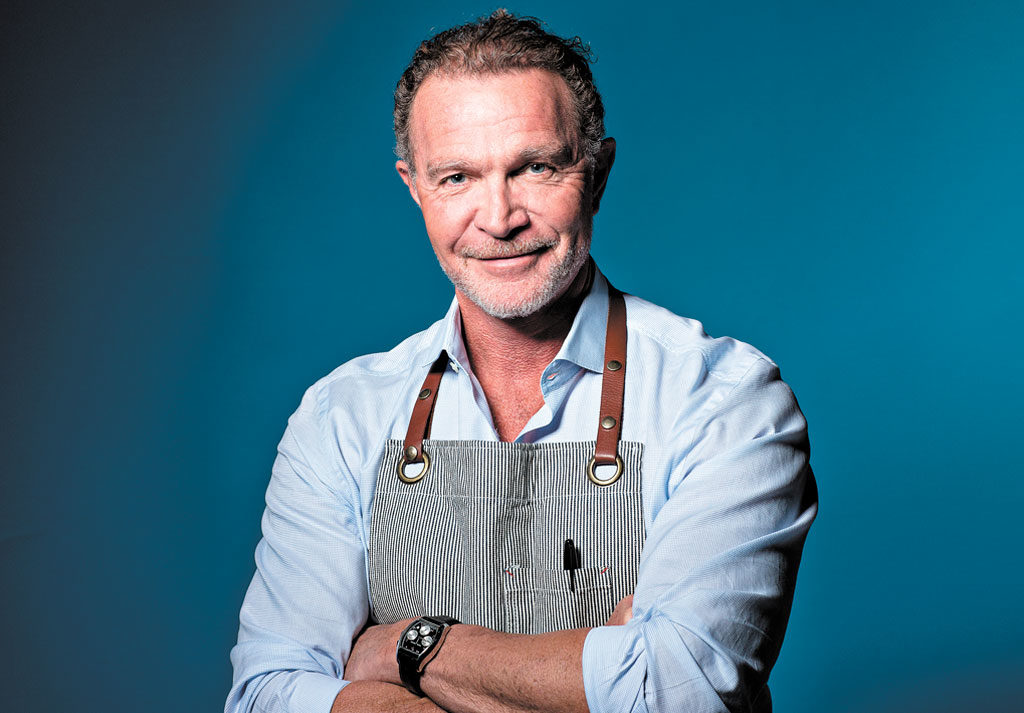
When a grocery store opens, there tends not to be much of a hubbub made over it. This, however, was not the case when celeb chef Mark McEwan cut the metaphorical ribbon on his 6,000-square-foot gourmet grocery this past summer.
In the maze of pathways beneath the TD Centre in downtown, the second iteration of the store serves up everything the modern office worker’s stomach could need: there’s coffee and breakfast sandwiches in the morning; salads, paninis and a food truck-inspired menu at lunch; and a hefty selection of grab-and-go options to throw in the oven of an evening. The lights are white and bright, the sensibility undeniably modern. There’s a lot of kale. There’s a lot of organic.
Above it, the all-lowercase “mcewan” sign shines with a stylishly subdued purple glow, the famous name a beacon to the city’s ever-more discerning food shoppers.
Around the same time as he was readying to open his store, McEwan, who is no stranger to TV, was also unveiled as the latest chef to join the Food Network’s Chopped Canada. He will be one of the judges on the hit show’s third season.
Name recognition and quality food are two pillars on which McEwan has built his empire. And after more than two decades at the top of the T.O. restaurant scene, it’s an empire that’s still on the march. It now encompasses four restaurants — including the renowned One in Yorkville and contemporary Italian eatery Fabbrica in Don Mills — two grocery stores and catering services. In September, McEwan announced he’d sold 45 per cent of the company to Fairfax Financial. Run by Midtown resident Prem Watsa — dubbed Canada’s Warren Buffett — Fairfax is a holding company that owns chunks of chains, including Swiss Chalet, Harvey’s and Sporting Life, and billions in insurance and banking companies. McEwan’s move was seen as a gamble but now, he says he’s looking to expand further.
In a city where restaurants can go from buzz to bust in months, McEwan’s staying power is impressive. He puts it down to one key thing: dedication to the fight.
“You have to dedicate yourself to staying current all the time and reinvesting in the operation,” he says. “All of that takes money and it takes guts and determination.”
Staying relevant is a concept McEwan returns to several times in our conversation, and it’s one he says his chefs spend a lot of time thinking about.
In recent years the restaurant industry has been particularly prone to bouts of over-exuberance on the back of a food trend — just think of the wave of ramen joints that swept over the city two or three years ago, the passion for molecular gastronomy that lost its liquid nitrogen–induced fizz or the current proliferation of gourmet hot dog places. Trying to stay on the right side of the line dividing innovation from faddishness can be tricky.
“I think the trends are sort of over,” says McEwan. “We had the tattooed bearded bro bartender phase where everything’s braised in beer with onions, and we are sort of emerging from that. I think classic service and really good operations is the only trend I am worried about — and preparing genuine, tasty food.”
McEwan’s desire to stand out from the trend-following crowd has found some expression in a revamp he’s currently working on for the bar at his One restaurant.
“I think I’ve seen enough natural wood in the city, so we’re going the other route,” he says. “It’s going to be very cool New York, a bit of mid-century modern accents of design but super-comfortable, super-plush, fun to be in with a good food menu for the bar.”
McEwan, who cites Daniel Boulud and Michael Bonacini as chefs he admires for their cooking and business skills, learned his way around a kitchen during an apprenticeship at a hotel in the 1970s. He graduated from George Brown’s culinary management course in 1979. A decade later, he had opened North 44, his own restaurant just north of Yonge and Eglinton.
Although it was no picnic to open a restaurant back then, he says the difference between the food scene of 1990s Toronto and that of today is “night and day.”
“Toronto was a pretty green food town back in the day — as most towns were in North America — but we’ve come a long, long way from that beginning,” he says, adding that most restaurants back then were still steak houses or attached to hotels.
“If you go back 20 years, on Queen West and King West there was nothing. That whole neighbourhood didn’t even exist.”
As restaurants vie for attention in the city’s ever more crowded dining scene, so the costs of getting into the game are spiralling. McEwan says he is seeing people spend two or three times what they used to, to build a restaurant, and new places are often opened by partnerships involving a bunch of different friends throwing their lot in together — a recipe for “creative differences,” he says, to emerge once the going gets tough and the rent is due.
To succeed in the business these days, skills in the kitchen and a passion for food are no longer enough.
In an industry of tight margins, would-be restaurateurs have to be as comfortable with financial spreadsheets as they are behind a stove, and McEwan says he tells his chefs that they have to “totally dedicate” themselves to understanding numbers and costs and operations if they’re going to make it.
But even in an age when chefs have to become accountants, McEwan says it’s crucial not to overcomplicate matters.
“We make plates of food and we make drinks and we take care of people,” he says.
And that’s all there is to it.

