
The Canadian Stage kicked off their new season last night with The Beckett Trilogy and this bold and powerful production offers much. It’s brilliant. It’s far from easy. It’s deep, and really dark in more ways than one. And, it might be the best date night stage production since Once mainly because of the amount of time spent in absolute darkness. Ahem.
The Beckett Trilogy, on now at the Berkeley Street Theatre until Nov. 1, includes three monologues from the acclaimed Irish playwright Samuel Beckett: Not I, Footfalls and Rockaby performed by talented Irish actress Lisa Dwan. The entire production clocks in at 59 minutes and takes place in a completely dark theatre — even the exit lights are turned off. The atmosphere certainly adds to the already somewhat eerie works that touch on subjects of mortality, loneliness, fear and abuse.
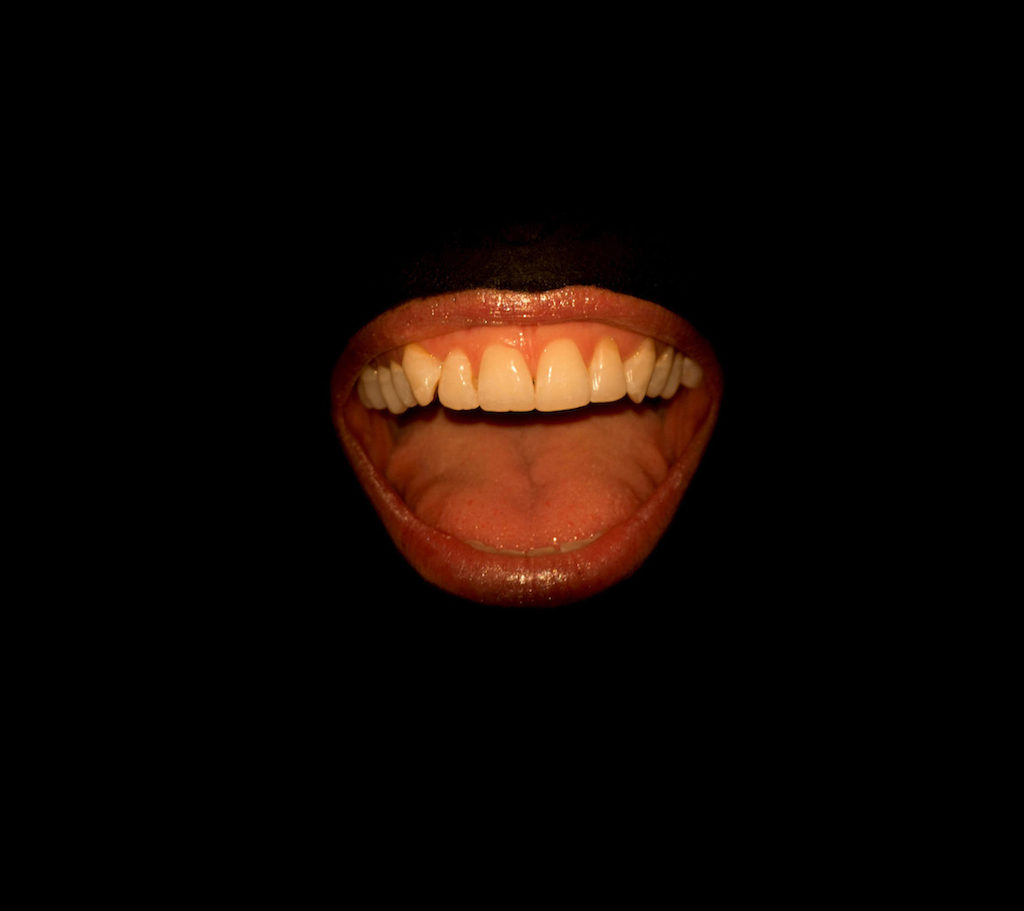
In the first work, Not I, written in 1972, the only thing illuminated on stage is Dwan’s mouth bright white teeth and red lips, everything else is as dark as can be. If one is seated next to a serious mouth-breather there might be trouble plucking a story or anything at all from the stream of consciousness dialogue that spews forth at a breakneck pace. Otherwise, it is almost hypnotic.
It is an interesting idea and it requires much of an audience, not just the performer. Get the cadence down, don’t try to hard, and some comprehension comes and that’s all that’s needed, as each and every word is weighted with emotion in this very visceral piece. Try too hard, fail to discern anything, at least sitting in absolute darkness with a room full of strangers offers it’s own unique rewards.
In Footfalls (1974), daughter May paces back and forth on a wooden floor dressed in a tattered white lace dress and looking somewhat wraithlike. The dialogue is sparse, and largely the narration of her mother who is and has been dying for a long time while May has lost her youth caring for her. The pacing consists of precisely nine steps and a turn and again over and over. Timing is everything in this performance and Dwan has so much power in each and every precise movement. Footfalls is divided into four segments, each begins with a chime, each ends with a slow fade out that when combined with the darkness gives May a more ghostly quality as her form slowly disappears from view.
The last instalment is perhaps the easiest in terms of grasping any deeper meaning. Rockaby (1980) features a woman in a fine black dress sitting in a wooden rocking chair. The monologue is again in four sections that show a woman, from young to old, turning away from the world in favour of sitting in her chair by the window and rocking her life away. Three lines are dropped into the monologue throughout: “Time she stopped,” “living soul” and “rock her off.”
The language here is very poetic, in stark contrast to Not I with a lot of repetition and it’s actually quite moving and enjoyable just to listen. But, again, Dwan makes it so much more as she demonstrates in perfect detail the woman’s slow and utterly lonely descent. Each stage of her fall punctuated with the word “more” ever softer until, well, there isn’t any more.
Again, it’s the repetition, the subtle movements and Dwan’s powerful presence that add so much to the sparse dialogue. Everything has meaning.
The Beckett Trilogy isn’t performed very often. Dwan has made a career of it, and a few others have tackled the challenge over the years including a few Hollywood types such as Jessica Tandy and Julianne Moore. It is a special evening and Dwan is a world-class performer. It isn’t your typical theatre fare, and there won’t be another opportunity to catch such a production anytime soon so do not hesitate. This work has enough power and depth to stir the mind and haunt the soul for weeks. Go.

