
“Make no little plans. They have no magic to stir men’s blood and probably will not themselves be realized.” That was American architect Daniel Burnham’s city-planning advice at the turn of the 20th century. More than 100 years later, he couldn’t be more wrong. Big, top-down building projects no longer stir the imaginations of North American city dwellers.
Small, creative projects that make cities more livable are popping up in unexpected places: alleys, front yards, vacant lots and parking spaces. Whether it's yarn-bombed street furniture or guerrilla gardens in overlooked spaces, these interventions are helping to transform properties and neighbourhoods, one light, quick, cheap tweak at a time.
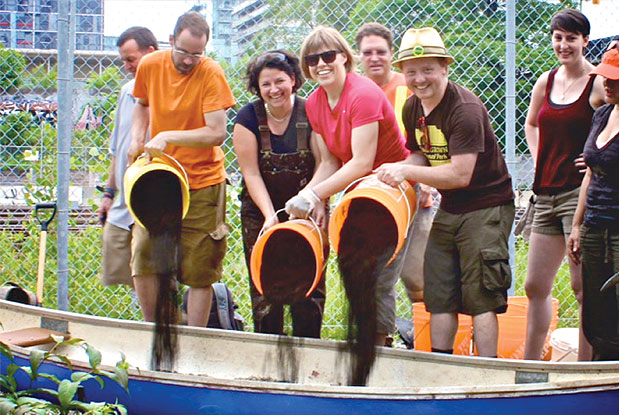
Last spring, residents of Toronto’s Palmerston Square took note when an old chalkboard suddenly appeared on a tall, rusted schoolyard fence that runs along their street — the first salvo from two participants in the David Suzuki Foundation’s Homegrown National Park Project.
Passersby were encouraged to write their desires for green improvements. Neighbours began meeting. One family filled a perpetual pothole with flowers. Others put benches in their front yards to begin “parkifying” the block. Graffiti knitters yarn-bombed the chain-link fence. An artist and local kids created a DIY outdoor version of fridge magnet poetry with plastic pipes cut in half, painted with words and hung on the fence with simple S-hooks. Two garden planters were dug into spots where trees had perished.
This spring, residents successfully funded a project to replace the entire stretch of asphalt with a large pollinator-friendly garden. There’s even talk of removing the fence. The ripple effect: People from nearby streets have started organizing their own interventions, like a pollinator garden at the daycare and moss graffiti in an alleyway.
Replacing pavement with a pollinator garden on one small street won’t solve the vast issues our communities face, but little spaces perhaps hold the greatest potential.
To make our cities truly green, we must bring nature to the oft-neglected bits between parks and existing green areas. Streets and sidewalks account for about 80 per cent of a city’s public space. Private spaces like yards, rooftops and balconies cover more than half the urban landscape. Stretching our visions of urban green space to include these allows us to reimagine the city as a vibrant green mosaic.
Squeezing more nature into cities requires creativity. It also needs participation from homeowners, property managers and experts from fields like landscape architecture and urban planning.
That’s why the David Suzuki Foundation and Workshop Architecture launched the Homegrown Design Challenge, an open competition that provides an opportunity to present ideas for low-cost, easy-to-implement landscape design solutions for front yards, backyards, balconies, schoolyards and laneways that provide environmental benefits.
What can we take from this revolutionary wave of small, creative interventions? That residents can play an active, hands-on role in transforming the places they live, work, play and share. Making your community truly greener is a tall order. But starting small can pay big dividends.
David Suzuki is the host of the CBC’s The Nature of Things and author of more than 30 books on ecology.

