
Looking at the little picture sometimes gives you a better sense of the big picture, and that’s true of city politics. We’ve been so bamboozled by Mayor Rob Ford and his antics that many of us might have missed the real change that has happened in our city.
While the mayor and his decreasing number of council allies have been flailing away at issues that have not met with success — the Ferris wheel on the waterfront, a big casino, jets on the Island airport, a very limited property tax increase — a number of councillors have been getting things done “under the radar” as Coun. Gord Perks puts it. “For the first two years, council followed Ford, but the dynamics have changed and people now go their own way.”
Perks was a significant player in the environmental movement before being elected in 2006.
He talks about the accomplishments of his colleagues on council such as Adam Vaughan (Trinity Spadina), Kristyn Wong-Tam (Toronto Centre–Rosedale), Janet Davis (Beaches–East York), Shelley Carroll (Don Valley East) and others as the “cacophony of the small.”
“There’s a shift in emphasis to build an activist community,” he says. “The appetite for a lively city is considerable, and it happens by normalizing projects on a neighbourhood level.”
It happens not by getting city council to establish some big broad new policy, but instead by making something happen as though it is a one-off that doesn’t challenge any greater agenda.
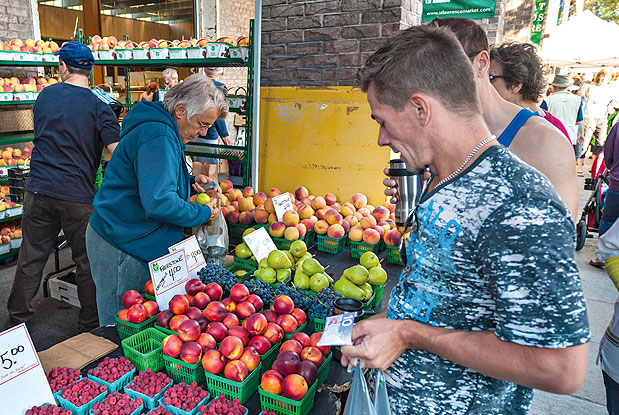
That’s why, now that June is here, there are so many local farmers’ markets flourishing in the city. It’s why innovative bike lanes have sprung up such as the contra-flow bike lane on Shaw Street or the bike lane threaded into the complexities of Roncesvalles Avenue.
It’s why fun and community-building projects such as temporary parkettes have appeared on streets. Or the pedestrianization of streets to meld together the different parts of Ryerson University. Or the promise to close King Street to traffic for the Toronto International Film Festival this fall.
“This neighbourhood level of investment has been happening in spite of the mayor,” Perks says.
“There are good people in the city’s public service. If politicians give them the appropriate permissions, they are more than willing to sit down with the public and implement innovations. But the councillor must be willing to take some risks.”
There have been many disputes about development, and Perks and most other councillors blame the Ontario Municipal Board for the staggering number of condo towers under construction. But the most active councillors have negotiated with developers for local benefits, using Section 37 of the Planning Act that enables them to demand money and/or affordable housing units.
Perks notes that achieving these affordable units is often done quietly, given that some community members are opposed to a good mix of incomes. But he thinks many hundreds of new units have been secured this way.
Gains have also been made in financial support for daycare and new park space. He thinks the new development permit system will strengthen the local councillor’s hand and deny developers free and easy access to the OMB.
One other hopeful sign is the renewed interest in what happens at city council itself. There’s enough of a market for council news that several people have found paying work tweeting and reporting on council meetings. “There’s a whole new social network that engages people about city politics,” he says.
And the tenor of council will surely change with new candidates who are challenging Ford supporters on the same basis, such as Alexandra Bravo against Cesar Palacio (Davenport); Bob Spenser against Gary Crawford (Scarborough Southwest); Russ Ford against Mark Grimes (Etobicoke-Lakeshore).
All of which leads one to believe that these rosy little pictures will probably lead to a much healthier big picture even in the unlikely event that Rob Ford re-emerges as a serious actor on the Toronto stage.
Post City Magazines’ columnist John Sewell is a former mayor of Toronto and the author of a number of urban planning books.

