
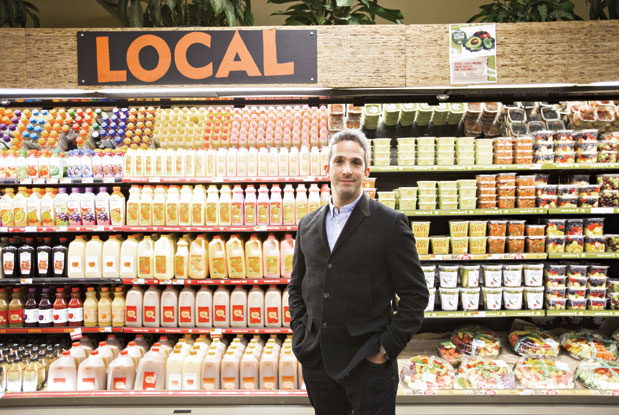
Approximately 15 years ago, gourmet burger joints started sprouting like mushrooms in cities and towns across North America. It was a rags-to-riches story — cheap fast-food mystery meat tossed aside for freshly grilled, organic, farm-raised, hormone-free beef patties. What triggers chain reactions like these? Toronto writer and journalist David Sax explores this in his new book The Tastemakers: Why We’re Crazy for Cupcakes but Fed Up with Fondue.
His first book, Save the Deli, was published in 2009 and is based on a university essay he wrote on the decline of the Jewish delicatessen. This led to new writing opportunities: among these, writing about food for Bloomberg Business Week. He is not a food writer in the traditional sense. There are no recipes or restaurant recommendations in his clippings; rather, the focus is on food as an industry.
“I write about business and culture, and I’m interested in the intersection of those,” he says.
It was here that the concept for the new book started forming. “I kept coming up with this idea that your sense of taste, which everybody thinks is such an individualistic thing, is actually manufactured or influenced in a lot of ways,” he says.
The idea evolved further when he interviewed the people who started Magnolia Bakery, a Manhattan Bakery known for its cupcakes. After the bakery’s popularity skyrocketed, much like gourmet burgers, we became absolutely obsessed with cupcakes. One popular food could change the tastes of a whole continent.
Although food trends are a global phenomenon, they are more influential in North America. As a society of immigrants, our culinary options span continents and oceans.
“It’s all about how we can adapt it so it’s authentic enough to be relevant to North American eaters without losing the flavour,” Sax says. Indian food, for example, has made an entrance into places ranging from Smokes Poutinerie to Momofuku: menus are peppered with items such as masala chicken sandwiches and butter chicken poutine.
He analyzes how they are formed, be it by individual or institution. “Once it enters the cultural lexicon of people, they demand and learn more about it, and it becomes an avenue to their tastes.” He also examines the forces that power these. “It’s like the person who works for Whole Foods who will take some obscure cheese and make it into something really popular because they have the power to do that,” he says.
Food trends are important because they have the power to influence society on many levels. For example, the exploding popularity of food trucks in Toronto compelled local lawmakers to amend the street food legislation, and the craze of accessorizing everything with bacon altered the economics of the pork industry.
Through his book, Sax seeks to give us a glimpse into how the business of taste can have big implications for our society as a whole. What new flavour, item or cuisine will gain traction across and perhaps beyond the continent? And how will it affect the business of our appetites and our lifestyles?
Sax will continue to identify and examine these phenomena as they emerge. For now, he is in talks for a new book (but he declined to give any details as nothing has been finalized).
The Tastemakers: Why We’re Crazy for Cupcakes but Fed Up with Fondue will be launching at 2nd Floor Events (461 King St. W.) tonight, 6 – 9 pm.

