
Is wrestling funny? I’ve never laughed. But the sport certainly has its followers, in the millions, who will tell you it doesn’t matter if it’s fixed or not; that what does matter is that its crackling good entertainment. And central to its entertainment value is its implicit humour.
To me, it’s always been a combination of crude and violent slapstick combined with overacted characters and overheated scripting. Then again, take away the falls and headlocks, and that’s a reasonable description of opera.
A lot of comics I respect admire wrestling and think it’s hysterical. Will Ferrell, for one, and our homegrown duo of Kenny and Spenny as well as local comedy legend Steve Shuster.
My sister’s not a comic, but she’s never missed a match and regaled me with the exploits of Sweet Daddy Siki and Rowdy Roddy Piper. My sister, the folkie, who also followed Dan Hill and Valdy!
Back in the ’80s, there was a Montreal comic named Mark Blutman who performed, masked and caped, as Crusher Comic. He got big laughs, but we would always have these disagreements where I would take the position he was doing a joke upon a joke. You can’t satirize something that is already satire, I would argue.
Wrestlers may play dumb onstage, but offstage they’re a savvy group. They practically invented personal branding, were quick to jump on the merchandising juggernaut, and their larger than life characters predated rap stars by a decade.
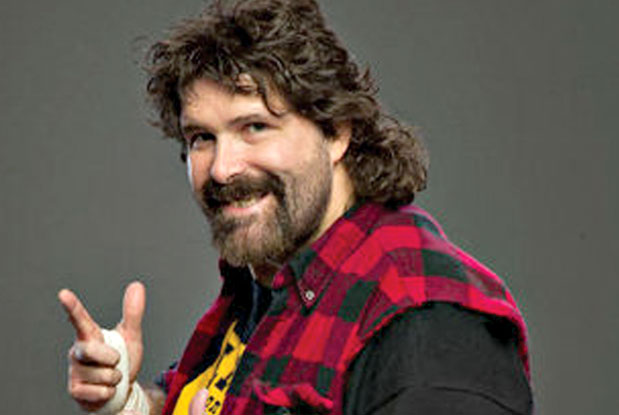
So it should come as no surprise that the world now has its first wrestler turned stand-up comic star, Mick Foley.
Foley performed under the moniker Cactus Jack for many years, and his specialty was pain endurance. Later he developed the character Mankind, which he said was inspired by Mary Shelley’s Frankenstein and the lyrics of Tori Amos.
I booked him in Toronto recently, and the show sold out in 25 minutes. His fans did not look like a typical comedy audience but were polite and enthusiastic. When I watched him, however, I had no clue what he was talking about. It was mostly anecdotes from the ring. It might as well have been in Greek.
I listened to his ability to tell a story, his deep baritone and admired his onstage charisma. I knew he was a master of his craft, even if I didn’t understand a word of it. But for a wrestling fan, this was nirvana.
I asked Foley about the relationship between wrestling and comedy, and here’s what he said:
“People think it’s a departure for me but it’s not. Wrestlers are natural storytellers inside the ring, telling stories with our bodies. Then I started to tell stories on the page, and then it was a natural extension of that to tell these stories live.”
He says it took a while to get the confidence to attack stand-up full throttle and credits 30 Rock cast member Judah Friedlander with giving him the will to continue.
The audience loved Foley. He was gracious and humble both onstage and off. He patiently met every fan before and after the show, signed autographs, posed for pictures. He was not a brute, more of a gentle giant. I came away from the show with more respect for wrestlers, if not wrestling itself.
But I still don’t find it funny.
Post City Magazines’ humour columnist, Mark Breslin, is the founder of Yuk Yuk’s comedy clubs and the author of several books, including Control Freaked.

