
Established Neighbourhoods
Although prices are getting up there, my favourite part of Toronto is still the St. Lawrence Market area, east of Yonge, south of King. It’s the only section of Toronto that feels even close to “Manhattan living.” You can live your whole life there easily (home, work, entertainment, shopping).
The St Clair and Yonge/Rosedale area is near bulletproof and tends to represent “the real money” (as opposed to wannabe money).
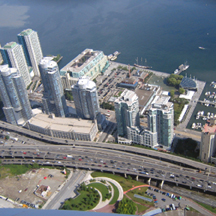
The central waterfront, although pricey, is by international standards still good value, and frankly is amongst the best in the world in terms of offering realistically priced residential amenities (foodstores, shops, etc.). Sure, there are warmer waterfronts on the planet but they tend to be overpriced tourist traps. The architecture of Toronto’s waterfront condos, although initially uninspiring, is now significantly improving, and will pull up the overall values.
“Emerging” neighbourhoods
The East Donlands (base of the DVP) is really going to surprise people in its scale, master-planned flow, and European ambiance. Consider it Toronto’s Canary Wharf (in a good sense). Hopefully (for the residents and the developers’ sakes) they install the transit as promised and when promised.
Spadina/Kensington Market still has upside potential, with several undiscovered pockets, wonderful side-streets and genuine sidewalk atmosphere.
Hey, I can’t resist saying that the Hamilton market will blow away Toronto in terms of capital gains in the coming years. I’m not expecting people to pull up stakes and move there, but if you want to make some real money (maybe to pay down the Toronto mortgage) buy an investment property in Hamilton.
 Harry Stinson was one of the first Toronto developers to recognize the potential for urban condominiums, to develop residential lofts, and to convert old office and warehouse buildings into residential spaces. His current project is the Stinson School Lofts, an 1894 heritage building in Hamilton, Ont., that he is converting into stylish and affordable lofts.

