
Not long ago, in a sad office in North York, the GTA’s construction industry scrawled the latest media release. Year-to-date sales of condos and new homes are at the lowest point in a decade, running more than 30 per cent below average. Two years ago, by this time of year, 34,286 units had sold. So far in 2013? A scary 19,327.
How does this reality square with the sizzling stats the realtors continue to churn? Happened days ago. CREA (Canadian Real Estate Association) scored the usual big headlines (“Average house price in Canada rises eight per cent to $391,820” — CBC) with its monthly press release declaring that both sales and prices jumped eight per cent year to year.
But all’s not exactly right. Nationally, October sales were off more than three per cent from September, which is a hefty drop. This comes on word that new home prices have started to sag, while building starts declined. Meanwhile news of job cuts, from energy (Encana) to tech (Blackberry) to sticky red stuff (Heinz), underscores the grim fact that without income, mortgages turn ugly.
CREA watchdog, GTA ex-realtor Ross Kay, once again raises a warning flag. The CREA, he says, is “creating a false impression that the market is busier than it actually is.” House prices are not catapulting higher because of more demand or buyer confidence, he argues, but rather because listings are shrinking.
“The already low level of single family houses that are actually available to be purchased under traditional financing requirements was further reduced in October of this year,” he says. “It has been a very trying year for homebuyers, and October 2013 only further added risk to the homebuying experience as prices continued to rise disproportionate to historical norms.”
Of course, CREA disagrees. The jump this fall, according to their chief economist Gregory Klump, was because buyers panicked over mortgage rates. “October’s lower activity provides early evidence confirming that sales in the later summer and early fall were boosted by homebuyers with pre-approved mortgages at lower-than-current interest rates jumping into the market before their pre-approvals expired,” says Klump.
The fact is, October was the first month in seven that sales declined. And Kay is correct about the number of available homes on the resale market. It’s shrinking. That’s created a narrow band of intense competition for homes selling for less than a million (the cut-off point for CMHC insurance).
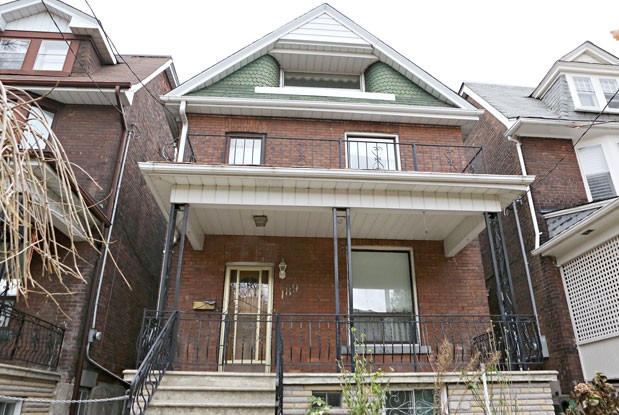
Take, for example, 189 Grace St. The house in Little Italy was listed for $849,000. Ten days later the sellers had 16 offers. The highest was $1.12 million. And the buyers, who paid $271,000 more than the sellers asked to snare a house that needs work, were apparently happy.
Builder despair at the same time as unfathomable buyer excess. Try as they might, realtors cannot make the case that this is a normal, healthy, balanced or sustainable market.
Post City Magazines’ real estate columnist, Garth Turner is an author, investment advisor and former MP.

