
According to findings from a new report, Canadians are drinking less than they used to.
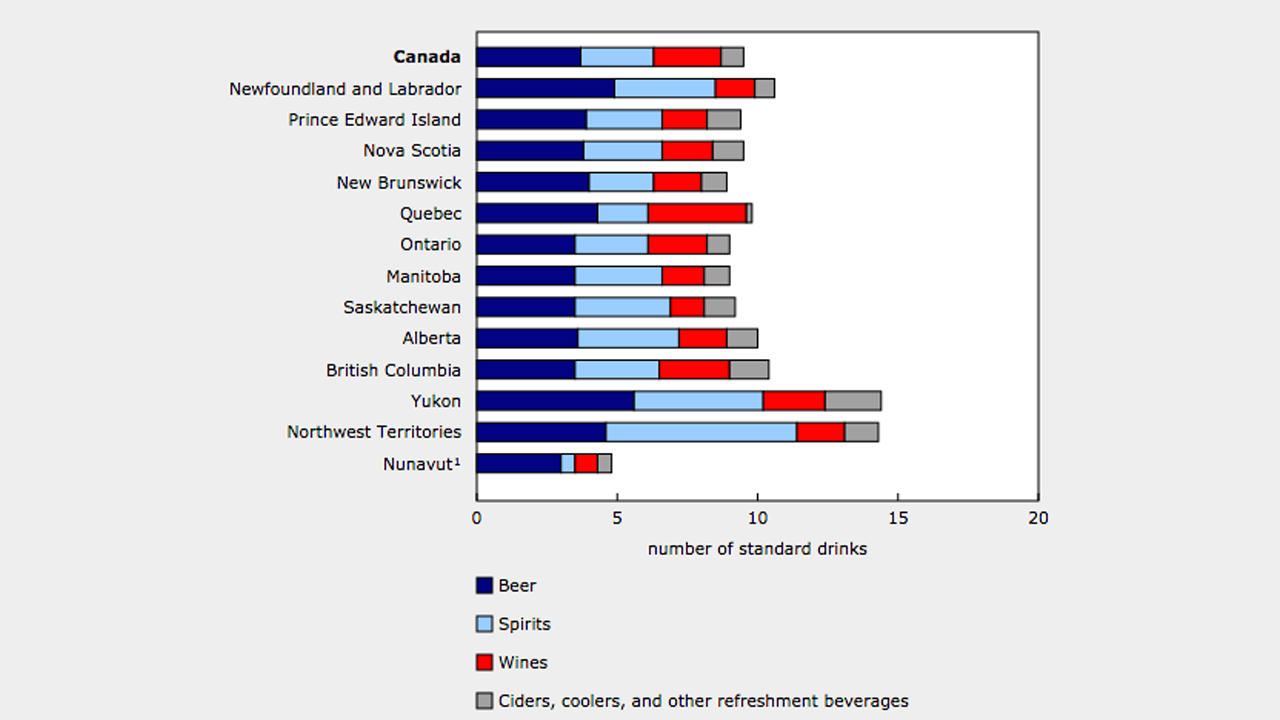
The Statistics Canada report released Feb. 24, details that the country has had the largest drop in sales by volume in more than decade, declining by 1.2 per cent to 3,141 million litres in the same year — equivalent to 9.5 alcoholic bevies per week per Canadian of legal driving age.
Between March 2021 and March 2022, the volume of beer sold per person took a nosedive while the volume of wine sales decreased drastically by four per cent —the largest decrease since 1949. The report found that the per-person volume of wine consumed is approximately 2.4 glasses.
Wine sales, however, rose 2.1 per cent to $8.1 billion, in line with the previous year.
And while the report also showed that during this period alcohol sales totalled $13.5 billion — an increase of 1.1 percent, this is not an indication that Canadians were drinking as much as in precious years. The increase in sales of boozy beverages was driven by inflation which rose 2.8 per cent for alcohol purchases from stores.
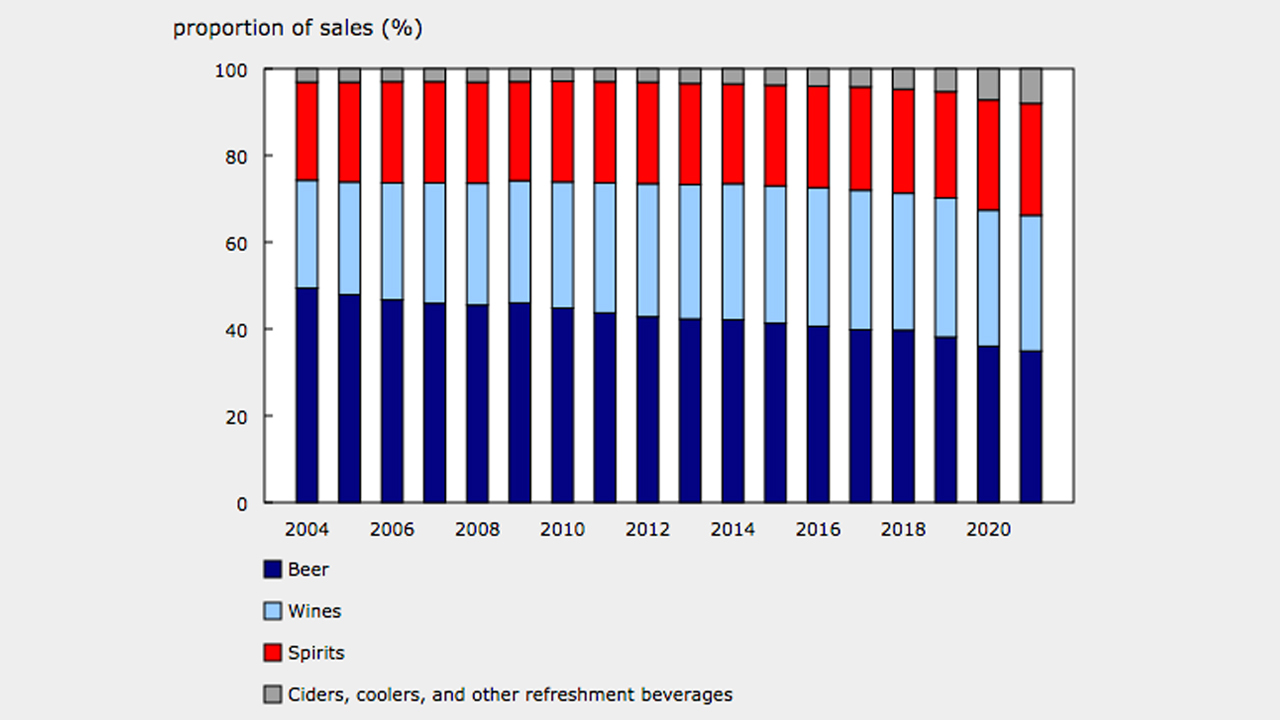
According to the report, over the last ten years, beer — once the country’s top alcoholic beverage by sales has continued to lose market share, with an 8.8 per cent drop. In its place, spirits, ciders and coolers continue to gain market share with a five per cent increase. By volume, sales have increased by 11.9 per cent from the previous year.
More changes are also on the horizon. Beginning on April 1, federal taxes on all alcohol is set to increase by 6.3 per cent.
The Stats Canada report also notes that recreational cannabis sales reached four billion — the equivalent of $131 per person. Yukon has the highest per person cannabis sales ($291), followed by Alberta ($210). Quebec has the lowest ($89).

