
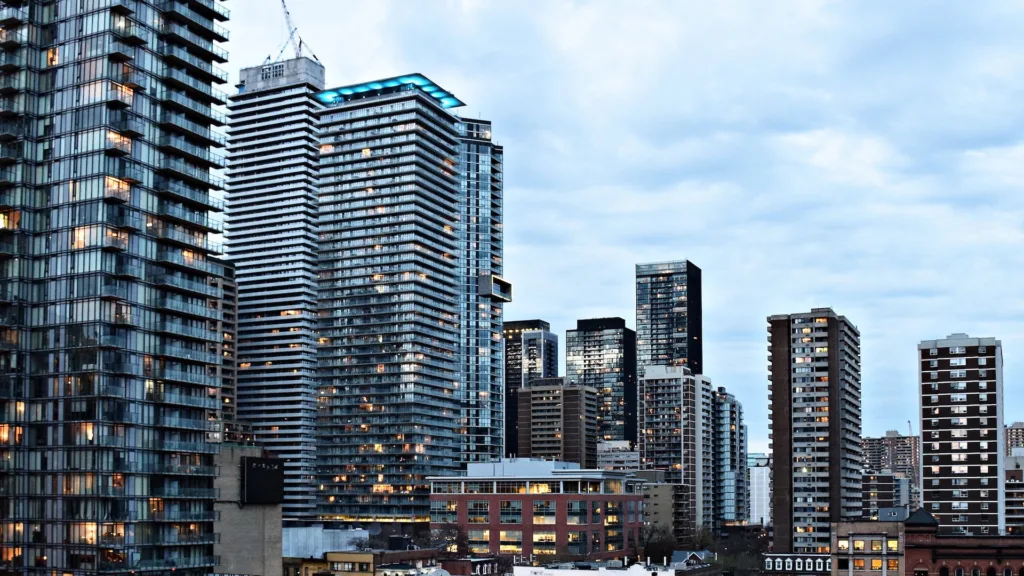
For more than a decade, Toronto’s skyline has been defined by cranes, with condo towers rising at a relentless pace, fuelled by strong population growth and a steady stream of investors. Now, this momentum has stalled, and the fallout is starting to reshape the city’s development industry.
According to a recent Bloomberg report, Toronto is sitting on more than 8,200 unsold condo units, with prices already down about 20 per cent from their peak. Another 10,000 units are still under construction, far enough along that developers can’t easily cancel them.
“The condo market is basically in a recession,” Benjamin Tal, deputy chief economist with CIBC, told Bloomberg. “You cannot go through this kind of shock without a change to the system, and I see the condo market of the future changing significantly.”
The problem is timing. High-rise condos can take up to five years to complete, meaning many of today’s unsold units were launched when interest rates were low, and demand was through the roof. Since then, borrowing costs have surged, and federal immigration targets have been temporarily scaled back, draining much of the investor appetite that once powered the market.
As a result, a growing number of developers are being pushed into receivership or creditor protection. One of the most visible examples is The One skyscraper at Yonge and Bloor. It was once primed as Canada’s tallest residential building, but the project filed for receivership in 2023 with more than $1 billion in debt. It has since been taken over by lender-backed developer Tridel. As per Bloomberg, the building is being repositioned to appeal more to end-users rather than investors.
Looking ahead, for condo projects, flipping units might be out. Instead of rent-friendly units, developers might focus on larger units and buyers who plan to live in them. At the same time, more projects are pivoting toward purpose-built rentals. Urbanation reports that 27,320 units across 61 Toronto-area developments originally planned as condos have since been redesigned as rental buildings so far in 2025.
“I don’t think condos are going to disappear,” Leor Margulies, a commercial real estate lawyer in Toronto told Bloomberg. “The question is how can they survive without massive investor backing, because that’s how it’s survived the last 10 or 15 years.”

