

Toronto has a massive scam problem and according to Toronto Police Service (TPS) it’s time to buckle up because it’s not going to get any better any time soon.
So far in 2025 as of early October, Toronto Police Service has logged more than $360 million in reported fraud losses by Torontonians, a figure that Det. David Coffey of the Financial Crimes Unit calls “staggering — and climbing fast.”
“That’s almost equal to all of 2024,” Coffey says. “We’re up 25 percent year-over-year. Fraud is escalating dramatically.”
Behind the scenes, organized crime, artificial intelligence and social engineering are colliding in a perfect storm — one that’s leaving everyone, from students to seniors, vulnerable. The modern scammer doesn’t just trick you. They study you, imitate you and weaponize your own trust against you.
Parking Ticket Scams and Phishing
What’s happening: York Regional Police have been warning residents about a text message scam involving fake speed camera tickets. Fraudsters send messages urging recipients to click a link to pay fines, but these messages are designed to steal personal and financial information. Police stress that all legitimate traffic tickets and payment instructions are sent through the mail, and no government agency will demand payment via text.
It often starts with something small — a simple text or email.
“Those text messages and emails that come into our mobile devices — I get them every day,” says Coffey. “I know everyone else does too.”
They look legitimate: a note from Canada Post about a missed delivery, a message from the CRA asking you to verify your account or an alert from your bank saying your card has been suspended. The logos are perfect. The tone is urgent. And the link looks close enough to the real thing that people click. Sometimes they even make it seem like the bank’s actual phone number and name.
Coffey says this is one of the most common ways fraudsters harvest personal information, even if they don’t get exactly what they want the first time around. The damage isn’t always immediate — sometimes the loss comes weeks later when your data is used to open new accounts, apply for loans or access your savings.
“These aren’t random messages,” Coffey explains. “They’re generated by massive databases built from previous data breaches. The fraudsters already know your email, maybe your home address, sometimes even your bank. They just need one more detail.”
What to do: Coffey’s first piece of advice is deceptively simple: slow down. “I always tell people to slow down,” he says. “That’s the single most effective defence.”
Bank Scams
What’s happening: In early October, TPS put out yet another warning about bank scams, explaining that scammers spoof (deliberately change the information displayed on your caller ID, email sender line or text message “from” field) bank phone numbers and claim victims’ accounts have been compromised, pressuring them to share passwords and PINs. Victims are often instructed to place their cards in an envelope for courier pickup, which is then intercepted by the criminals to drain accounts through e-transfers, withdrawals or purchases.
If phishing is the low-hanging fruit, impersonation scams are where things turn sophisticated — and terrifyingly convincing.
“The biggest one over the last six months has been impersonation scams,” Coffey says. “It’s a direct result of enhanced methods by fraudsters using artificial intelligence.”
Victims get a phone call from someone claiming to be with “Toronto Police,” the “Crown Attorney’s Office” or a “bank fraud investigation unit.” The caller sounds professional, speaks confidently and seems to know personal details — enough to feel real.
“They’ll say your bank account’s been compromised or that your credit cards have been cloned,” Coffey says. “Then they’ll send someone to your house to collect your cards and PINs. That gives them immediate access to your accounts.”
In some cases, victims have even been told their money needs to be “secured in a government account” to prevent theft — and have willingly transferred their savings to the fraudster’s control.
Coffey explains how convincing it can be: “The scammers use information from the internet — from data breaches or social media — and artificial intelligence to scrape and compile details. They already know your name, address, middle name, phone number, even account types. That makes it sound legitimate.”
And thanks to caller ID spoofing, their phone number might even show up as “Scotiabank” or “Toronto Police.”
“The moment someone asks for your bank card or PIN, hang up,” Coffey warns. “No bank or police officer will ever send someone to collect your cards. Ever.”
What to do: If a call, text or email feels suspicious, hang up or delete it. If it claims to be from your bank, call the number on the back of your card — not the one that called you.
“Even if the number on your display looks the same, hang up and call it yourself,” Coffey says. “You’ll reach your real bank, and they’ll tell you it wasn’t them.”
The Grandparent Scam
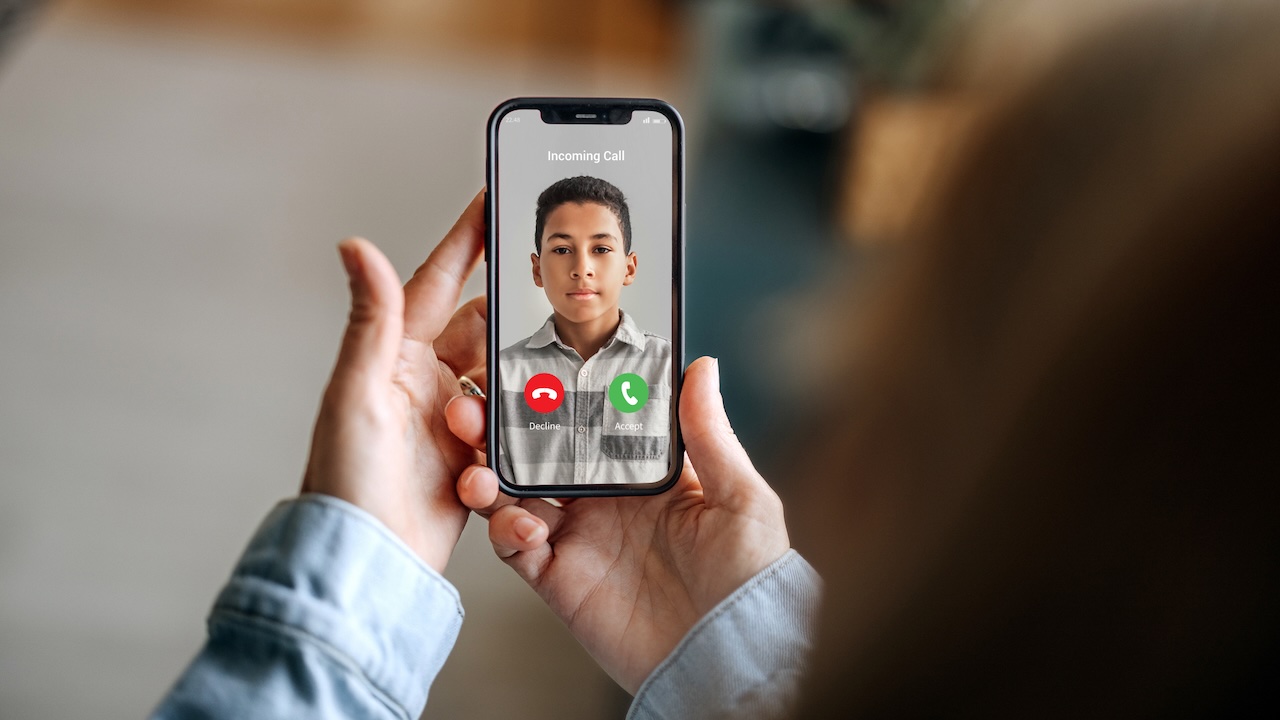
What’s happening: Toronto Police Service cautioned the public on Oct. 8 about a scam targeting elderly members of the Russian-speaking community. Scammers call victims, impersonating family members or acquaintances, and claim they are involved in an urgent incident — such as a car accident or medical emergency — requesting immediate financial help. Victims are instructed to gather cash and hand it over to a stranger, often while remaining on the phone with the scammer to prevent verification. Police advise anyone receiving such calls to hang up immediately and report the incident. Though impersonation scams prey on logic and fear, grandparent scams go after something far deeper — love and panic.
During the pandemic, reports of these scams exploded across Toronto. Seniors would receive frantic calls from someone claiming to be their grandchild, saying they’d been in an accident or arrested. A supposed “lawyer” or “officer” would then get on the line, demanding thousands in bail money — usually in cash.
“Hundreds of people were scammed out of thousands of dollars,” Coffey recalls. “An investigation linked it to Quebec organized crime, and several arrests were made.”
But the scam hasn’t gone away — it has evolved.
“Right now, we’re seeing a rash of grandparent scams in the north end of the city targeting the Russian community,” Coffey says. “It’s Russian organized crime targeting Russian-speaking citizens in Toronto.”
The calls are frighteningly authentic. The fraudsters speak Russian and use personal details scraped from social media.
“They’re pretending to be ex-spouses, ex-employees or relatives,” Coffey explains. “They use personal information to make it sound real. There’s a real wave of these happening right now.”
He groups them under what police call “emergency scams” — any scenario where a victim is pressured to send money immediately to help a loved one in crisis.
“These scams work because they hijack emotion,” says Coffey. “The fraudsters create urgency and fear, and people stop thinking rationally.”
What to do: Coffey says most scams rely on the same three emotional levers: urgency, fear and greed. “Fraudsters always create a sense of urgency,” he says. “They pressure you to act now — before you can think.”
Rental Scams
What’s happening: Recently, the Royal Canadian Mounted Police (RCMP) was warning people to be vigilant following a rise in rental scams that have cost unsuspecting renters thousands of dollars. In one common scheme, fraudsters pose as landlords, show fake rental properties, collect deposits and rent payments — often more than $2,000.
One Torontonian told us that they thought they had rented an apartment through an online service, which also used airbnb as a portal to view the property.
“At this time I was commuting from Hamilton to Toronto for school, and I never had the time to actually see it in person, which I note is my fault,” the person says. “And yes, I sent the rent, then I was ghosted.”
What to do: To avoid being scammed, renters are urged to research listings, visit properties in person, verify ownership and never send money or personal information before confirming the legitimacy of the rental. Red flags include unusually low rent, landlords unwilling to meet in person and requests for deposits without a signed agreement.
“I was blinded by the fact I could have a place closer to school to ease my stress,” the person says. “I ignored the red flags and learned a valuable lesson that day.”
Romance Scams and “Pig Butchering”
What’s happening: The RCMP is warning Canadians about romance scams, in which fraudsters create fake online identities to gain victims’ trust and affection for financial gain. Scammers often research victims on social media, build a seemingly genuine relationship and then fabricate urgent scenarios — such as medical emergencies or investment opportunities — asking for money, gifts or cryptocurrency. Victims can lose thousands, and the emotional toll is often severe, including shame and heartbreak.
Among the most emotionally devastating frauds are romance scams — now supercharged by AI and cryptocurrency.
“They build relationships slowly,” Coffey says. “They talk every day, share photos, maybe even have video chats. But the person on the screen isn’t real — it’s AI generated, a deepfake.”
Once the victim’s trust is secured, the financial angle begins. “They’ll start talking about their investments, their glamorous lifestyle,” he says. “Naturally, the victim asks, ‘How are you doing that?’ That’s the hook.”
Soon, the victim is convinced to “invest” in a crypto platform or trading app that looks legitimate — complete with real-time charts and fake customer support. The profits look amazing at first. But when they try to withdraw, the truth hits: the money’s gone.
That’s the origin of the term “pig butchering.”
“It’s a term coined by Chinese organized crime groups,” Coffey explains. “They realized they could combine romance scams and investment scams. Build a fake romantic relationship, then introduce an investment opportunity.”
Victims are “fattened up” emotionally, then “butchered” financially.
“The scammers’ goal is to take every last cent,” Coffey says. “They’ll push victims to borrow from family, take loans, even mortgage their homes. They’re ruthless.”
And it’s not rare. “Today, around 70 per cent of all fraud money flows through investment scams like this,” Coffey says. “People lose hundreds of thousands, even millions.”
What to do: The warning signs are always the same: if someone you’ve never met in person asks for money — especially for an investment — it’s a scam.
Fake Celebrity Scams
What’s happening: Cybersecurity experts say fake celebrity endorsements and pop-up ad scams are on the rise, often spread through social media and deceptive websites. They advise verifying sellers, avoiding deals that seem too good to be true and not entering payment details unless you’re sure the site is legitimate.
A Toronto woman is warning others to be careful when shopping online after narrowly avoiding a scam involving a fake celebrity skin care line.
She says she came across what appeared to be a pop-up ad for a new all-natural skin care brand supposedly launched by a television personality she follows. Intrigued by a buy-one-get-one-free deal, she entered her credit card details and completed the roughly $50 purchase — but immediately felt uneasy.
“I got a bad feeling the moment I hit ‘send,’” she says. “I searched ‘[celebrity] scam’ and a bunch of articles popped up. For some reason there was a phone number listed on the fake website, so I called — not expecting anyone to answer. But someone did.”
She panicked and told the person on the line she knew it was a scam and was worried about her card information. By the end of the call, the order had been cancelled and she did not experience any further problems.
The experience left her embarrassed and shaken. “I could understand an 80-year-old falling for something like that, but I was young and thought I was tech savvy and smart enough to know better,” she says. “My main concern wasn’t the $50, but that they now had my credit card info and address.”
What to do: She hopes her story is a reminder to trust your instincts online and double-check before clicking — and to act quickly if you suspect a scam and contact your bank.
Fake Speeding Tickets
What’s happening: York Regional Police are warning residents about a new text message scam circulating across the region involving fake speed camera tickets.
Fraudsters are sending text messages that appear to be official notices, claiming the recipient must click a link to pay an outstanding fine. The messages often look legitimate and use urgent language to trick people into revealing personal and financial information.
Police emphasize that legitimate traffic or speed camera tickets are only sent by mail, never by text or email. Residents are urged not to click links or download attachments from unexpected messages and to ignore any text demanding payment.
What to do: The advice is simple: Police remind residents to stay alert and verify any suspicious communication directly with official agencies, using trusted contact information.
Financial Fraud
What’s happening: Canadian regulators are warning of a surge in complex financial frauds that have defrauded investors of hundreds of millions of dollars.
In Muskoka, a Toronto mortgage broker is accused of running a $100 million Ponzi-style real estate scheme that promised returns from syndicated mortgages but instead funnelled funds into bogus projects. According to a court-appointed receiver, investors’ payouts were often financed using new deposits — a hallmark of Ponzi operations that collapsed when the housing market slowed.
Earlier this year, the Ontario Securities Commission (OSC) announced fraud allegations against a financial company that raised over $500 million from investors across Canada and the U.S. The OSC alleges at least $70 million was diverted to unauthorized uses, including real estate ventures and repayment of earlier investors, before the firm fell into bankruptcy. The commission says the misconduct harmed investors and undermined confidence in Canada’s capital markets.
What to do: Experts say these cases highlight how overheated markets — from real estate to film financing — can become breeding grounds for deception. The OSC urges investors to verify registrations and conduct due diligence before committing funds, warning that high returns and urgency are key red flags. As housing and investment pressures persist, regulators caution that sophisticated scams exploiting investor trust are likely to continue.

Seasonal scams
What’s Happening: Scams also follow the calendar. Each season brings its own wave of deception.
“In spring and fall, it’s renovation and roofing scams,” Coffey says. “Tax season brings CRA scams. Around Christmas, it’s package delivery or fake Amazon messages.”
Contractor scams are particularly common during home improvement season. Victims are approached by someone offering a great deal on driveway paving, roofing or window repair. The work begins — and then the contractor vanishes, leaving the job half done and the deposit gone.
“Fraudsters time things to what people are thinking about,” says Coffey. “It’s smart, calculated and constant.”
The same principle applies to fake delivery notifications during the holidays. Victims receive texts saying their package is delayed or requires a small customs payment. The link leads to a phishing page that collects banking details.
What to do: “It’s all about what feels normal at the moment,” Coffey says. “People let their guard down because it fits the time of year.”
What to do if scammed
Contact your bank immediately.
“They might be able to recover your money, though not always,” Coffey says. “If you gave someone your bank card and PIN, the bank probably won’t reimburse you — that’s considered voluntary.”
Contact a credit agency to flag your account and prevent new credit being opened in your name.
Change all passwords if there’s any chance your computer or phone was compromised.
“If you’ve lost money, report it to the police,” Coffey says. “We need those reports to warn others.”
The reality is that Toronto’s fraud epidemic isn’t going anywhere. It’s global, it’s profitable, and it’s getting smarter. But with vigilance, skepticism and a little digital street smarts, residents can avoid becoming the next victim.

